# What to Do After Heavy Rain Hits Your Pool
Heavy rain can make a clean pool look questionable fast. The water level rises, leaves wash in, chlorine drops, pH shifts, and the pool may turn dull or cloudy a day later. The instinct is to dump in shock, clarifier, and algaecide all at once.
Do not do that first.
After a storm, the right move is to clean, restore circulation, test, and then adjust what actually changed. Rain is not automatically a disaster, but ignoring it can let cloudy water or algae get a head start.
## Start by removing debris
Rain usually brings leaves, mulch, pollen, dirt, roof runoff, and small yard debris into the pool. That debris consumes chlorine and can stain surfaces if it sits too long.
Start with the simple cleanup:
– Skim the surface
– Empty skimmer baskets
– Empty the pump basket
– Brush steps, corners, and ladders
– Vacuum debris from the floor
– Remove anything sitting on benches or tanning ledges
Do this before adding chemicals. Chlorine works better when it is not being wasted on leaves and dirt you could physically remove.
## Lower the water level if needed
If rain raised the water above the normal operating level, lower it before judging circulation. Water that is too high can reduce skimmer action because debris floats past the skimmer opening instead of being pulled in.
Bring the water back to around the middle of the skimmer mouth. Use the waste setting, a drain line, or a submersible pump if appropriate for your setup.
Do not drain too much. Lowering water too far can make the skimmer pull air and cause pump priming problems.
## Check the equipment pad
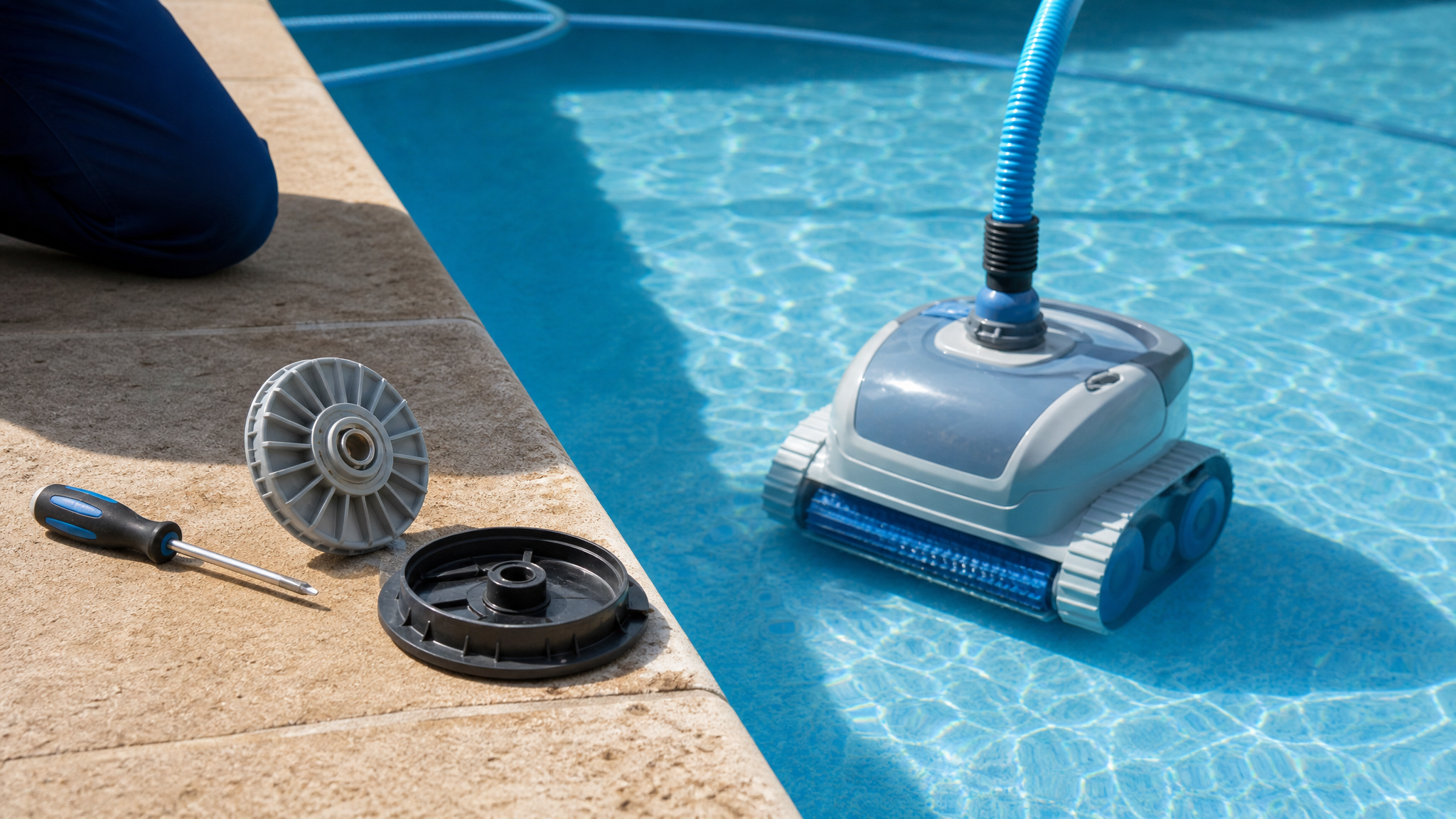
Storms can leave the equipment pad wet, dirty, or covered with debris. Before restarting or changing settings, check for obvious problems.
Look for:
– Blocked pump baskets
– Leaking pump lids or unions
– Tripped breakers or GFCI outlets
– Debris around the motor vents
– Filter pressure changes
– Valves moved or knocked out of position
If electrical equipment has been flooded, do not turn it on casually. Get a qualified professional involved. Pool equipment and standing water are not a place to improvise.
## Run the pump and filter
Once the water level is correct and the equipment looks safe, run the pump. Storm cleanup takes circulation. The filter needs time to catch fine debris, pollen, and dead organic material.
During cleanup, run the pump longer than usual. If filter pressure rises 20–25% above clean pressure, clean or backwash the filter. A dirty filter can slow recovery and make cloudy water linger.
If return flow is weak after the storm, check baskets, valves, and filter pressure before blaming chemistry.
Download Pool Chemical Calculator for iPhone | Get Pool Chemical Calculator for Android
## Test chlorine and pH first
After heavy rain, free chlorine often drops because rain adds contaminants and dilutes the pool slightly. pH can move too, depending on the rain, aeration, and pool chemistry before the storm.
Test at least:
– Free chlorine
– Combined chlorine
– pH
– Total alkalinity
– CYA/stabilizer
If the pool is cloudy, green, or smells bad, do not stop at a quick strip reading. Use the best test kit you have and get real numbers before adding chemicals.
## Do not assume rain always lowers pH
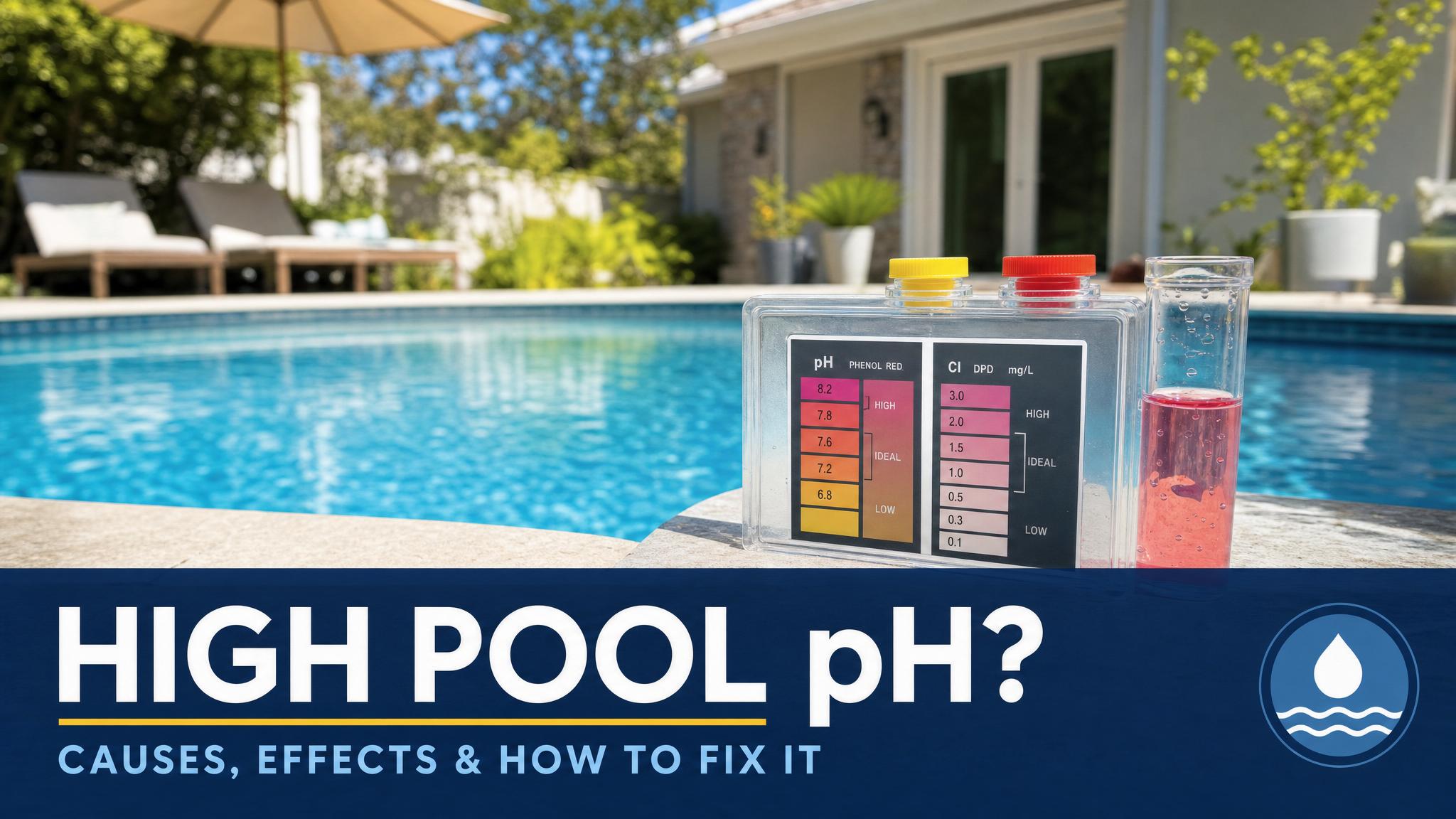
People often say rain lowers pH, but pool results vary. Rainwater can be slightly acidic, but storm aeration, runoff, alkalinity, and existing water balance all affect the final reading.
That is why testing matters. If pH is high, chlorine works less effectively. If pH is low, swimmers and surfaces can be irritated or damaged.
Adjust pH based on the test result, not based on the fact that it rained.
## Bring chlorine back into range
Once debris is removed and pH is reasonable, restore free chlorine. If the pool stayed clear and chlorine is only a little low, a normal chlorine dose may be enough.
Shock may make sense if:
– Free chlorine dropped to zero
– Combined chlorine is high
– Water is cloudy or green
– The pool has a heavy organic load
– Debris sat in the pool for a long time
Use CYA to guide the target. Stabilizer changes how much chlorine is needed, especially for outdoor pools.

Clean Water Pools may earn from qualifying Amazon purchases.
## Check alkalinity and stabilizer after major rain
A small shower may not change much, but a heavy storm can dilute alkalinity and CYA, especially if you had to drain water afterward.
Low alkalinity can make pH swing. Low CYA can let sunlight burn off chlorine quickly. High CYA can still be a problem if tablets were used heavily before the storm, so test instead of guessing.
Make adjustments gradually. It is usually better to correct the important numbers in order than to add every chemical in the shed on the same day.
## Brush the pool after the storm
Brushing matters after rain because dirt and organic film settle into places where chlorine has a harder time working. Steps, ladders, corners, light niches, and shallow ledges are common trouble spots.
Brush even if the pool looks mostly clean. A few minutes of brushing can prevent a small algae start from turning into a full cleanup.
## When to use clarifier
Clarifier can help with mild haze after the pool is balanced and filtering well. It should not be the first move after a storm.
If chlorine is low, pH is off, the filter is dirty, or debris is still in the pool, clarifier may disappoint you. Fix the basics first. Then consider clarifier only if the water remains slightly cloudy and the filter is working.
## A simple after-rain checklist
Use this order after heavy rain:
1. Remove leaves and debris.
2. Lower water to normal level if needed.
3. Check pump, baskets, valves, and filter pressure.
4. Run the pump longer than usual.
5. Brush steps, corners, ladders, and ledges.
6. Test chlorine, pH, alkalinity, and CYA.
7. Adjust pH if needed.
8. Bring chlorine back into range or shock if conditions call for it.
9. Clean or backwash the filter when pressure rises.
10. Retest the next day.
Use Pool Chemical Calculator after each test so you dose based on pool gallons and actual readings.
## FAQ
### Should I shock my pool after every heavy rain?
Not always. If chlorine is still in range and the water is clear, you may only need normal adjustment. Shock is more useful when chlorine is very low, combined chlorine is high, or water is cloudy or green.
### Does rainwater lower pool chlorine?
Heavy rain can dilute chlorine and add contaminants that consume chlorine. The larger issue is often the debris and organic load that storms wash into the pool.
### Should I drain my pool after rain?
Only lower the water if it is above the normal operating level. Aim for about the middle of the skimmer opening so skimming and circulation work correctly.
### Why is my pool cloudy after rain?
Cloudiness after rain can come from dirt, pollen, low chlorine, pH problems, poor filtration, or algae starting to grow. Clean debris, test, balance, and filter before using clarifier.
### How soon can I swim after heavy rain?
Swim only after the water is clear, the bottom is visible, chlorine and pH are in the safe range, and no electrical or debris hazards remain.
## Bottom line
After heavy rain, do not panic-dose the pool. Clean debris, restore the water level, run the filter, test the water, and adjust chlorine and pH from real numbers.
Pool Chemical Calculator makes storm recovery easier by turning your test results into accurate chemical doses.
Download Pool Chemical Calculator for iPhone or get Pool Chemical Calculator for Android.