
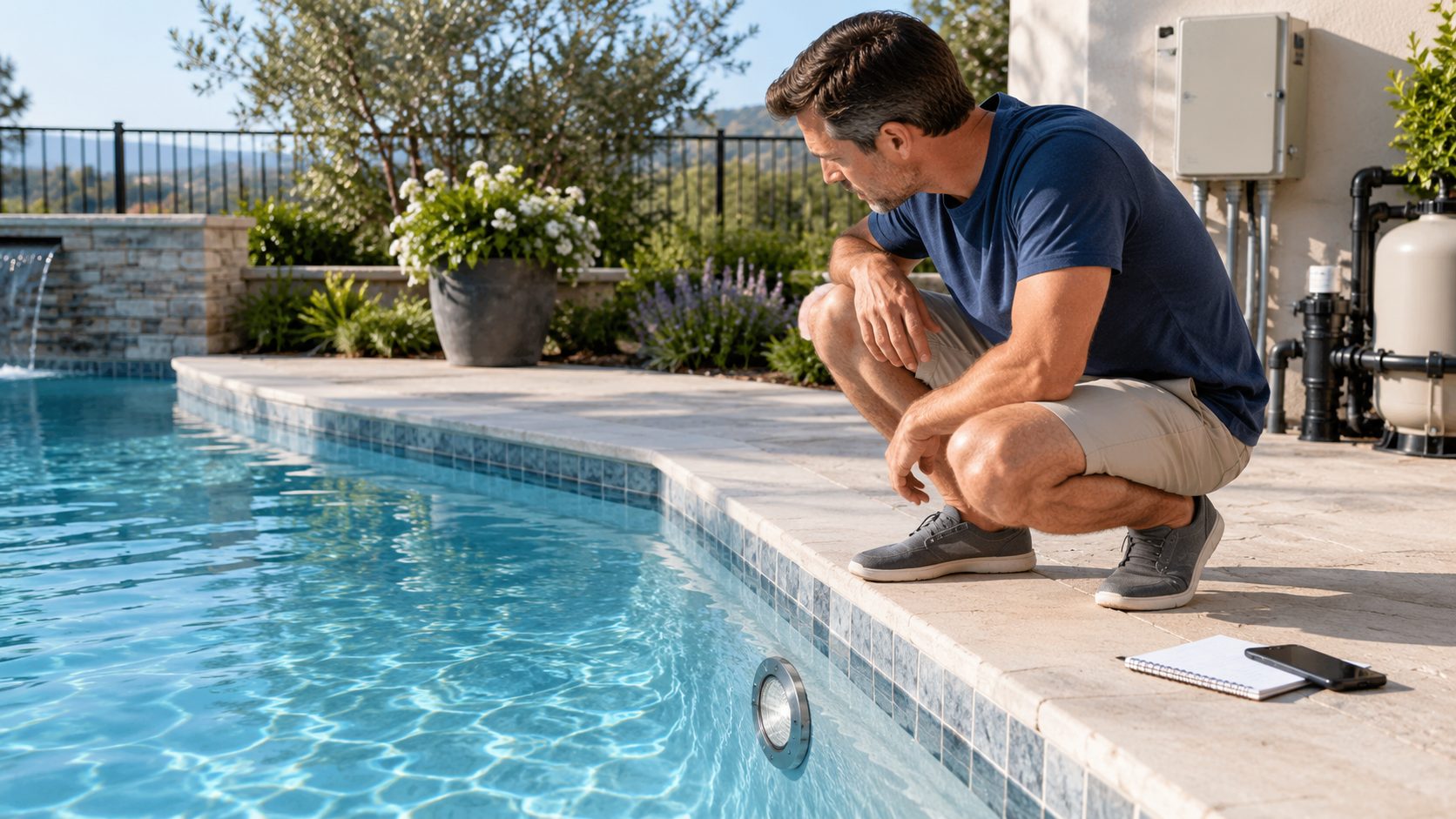
Disclosure: This article contains Amazon affiliate links. As an Amazon Associate, Clean Water Pools may earn from qualifying purchases. When a pool light is not working, the safe first move is to slow down. A dark fixture, flicker, tripped GFCI, or light that only works sometimes can look like a simple bulb problem, but pool lighting mixes electricity, water, bonding, fixtures, controls, and sometimes automation. That combination deserves more caution than a normal household light. This guide stays on the …
Blog Posts
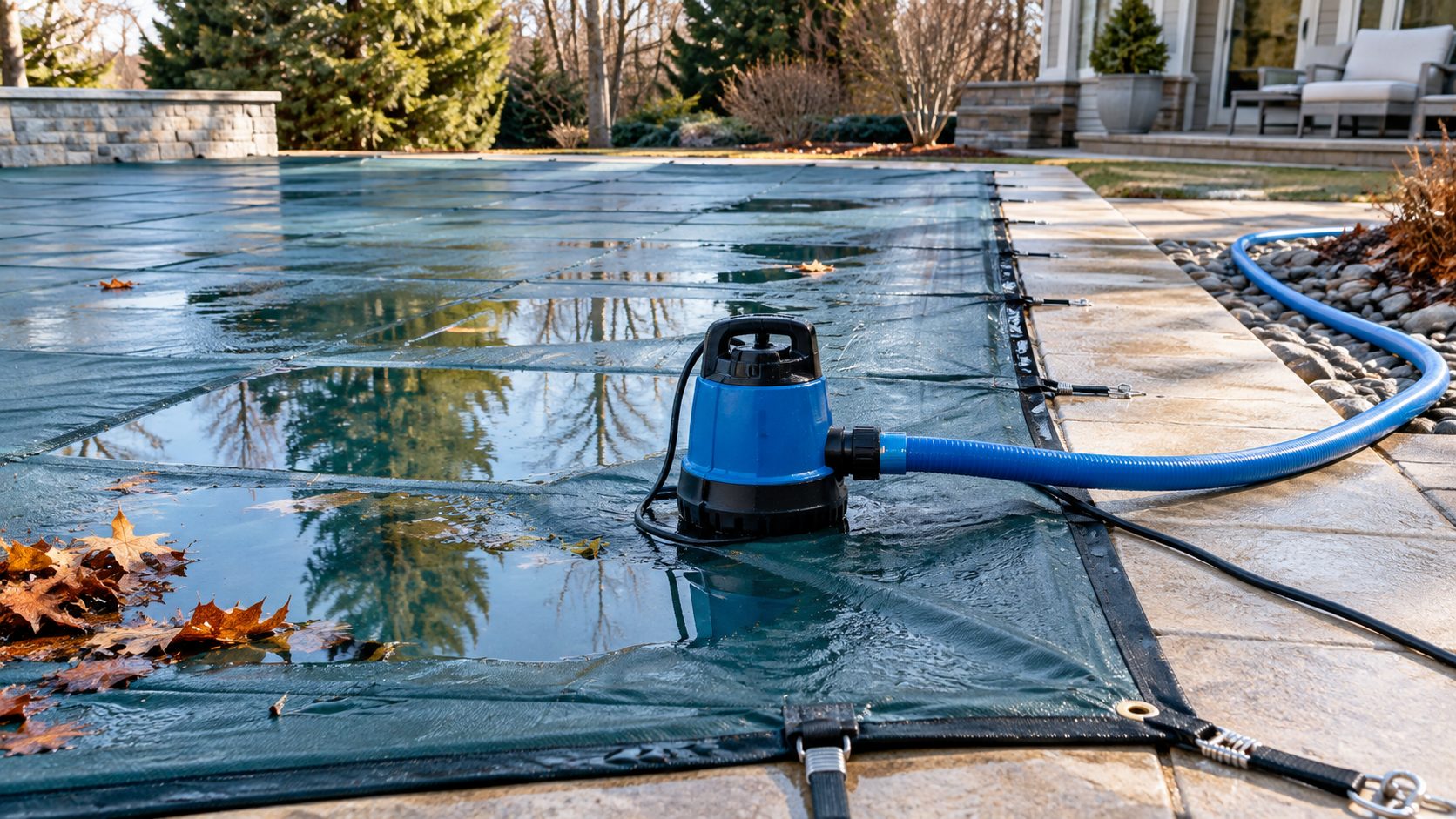
Disclosure: This article contains Amazon affiliate links. As an Amazon Associate, Clean Water Pools may earn from qualifying purchases. A pool cover pump setup is worth doing before the rainy week starts, not while water is already pulling the cover into a sagging bowl. The goal is simple: remove rainwater without walking on the cover, flooding the deck, soaking electrical connections, or pumping the same water right back toward the pool. Use your own cover and pump manuals as the …
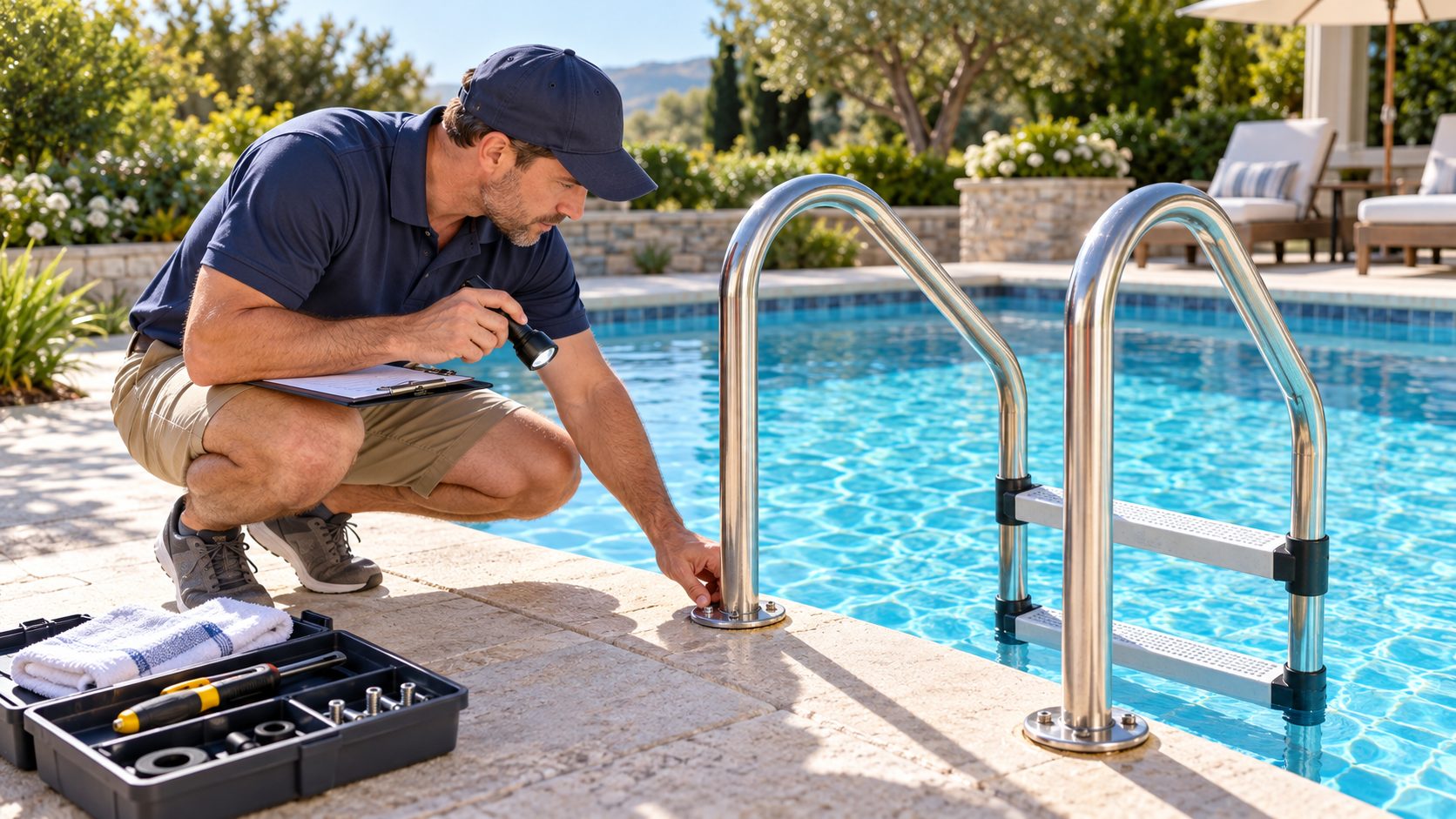
Disclosure: This article contains Amazon affiliate links. As an Amazon Associate, Clean Water Pools may earn from qualifying purchases. A pool ladder and handrail inspection is one of those spring checks that feels small until someone grabs a rail that moves. Do it before swim season, while the deck is quiet and there is time to order parts or call service. This is not about yanking on a rail to prove it is strong. It is a careful look at …
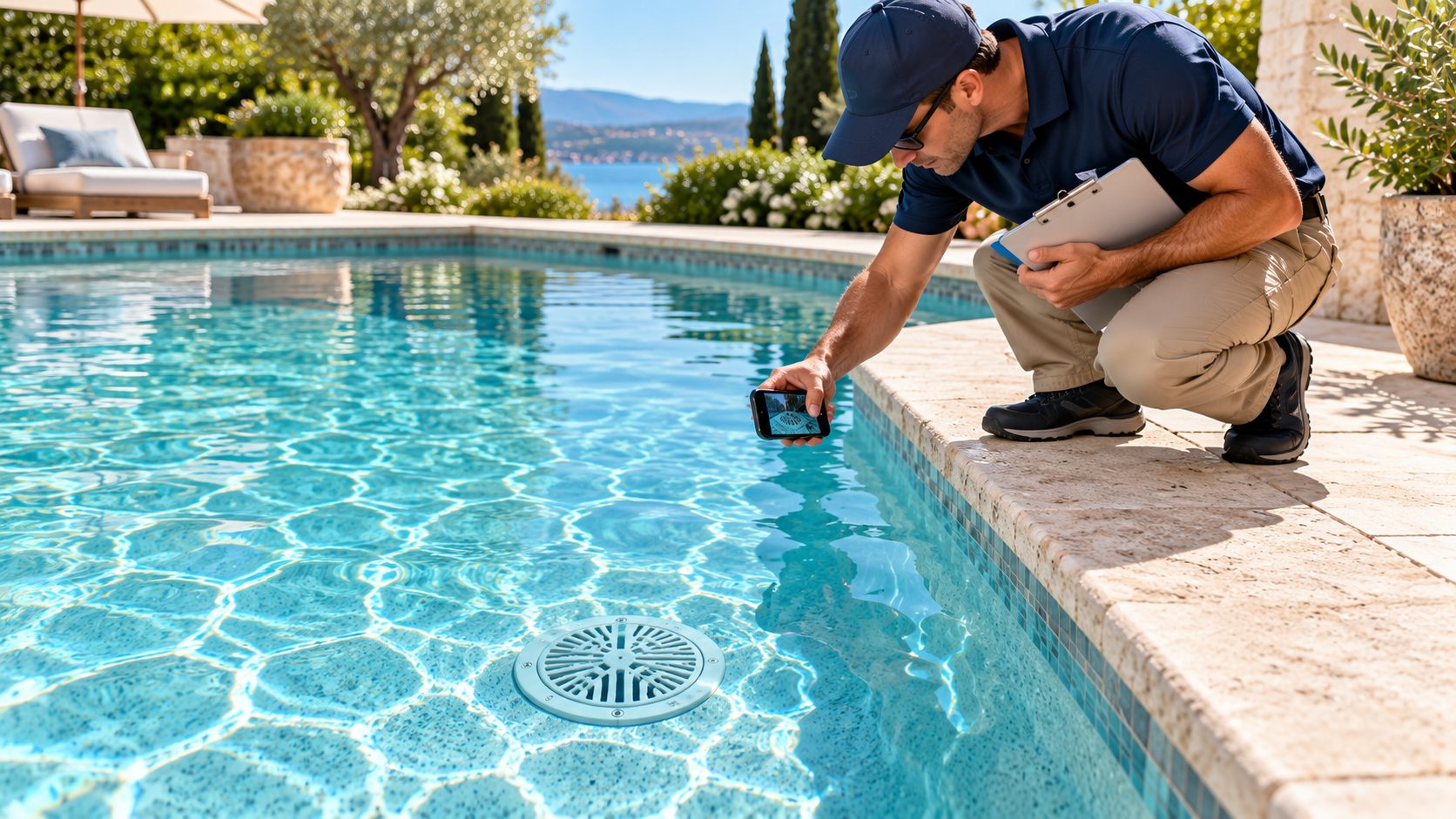
Disclosure: This article contains Amazon affiliate links. As an Amazon Associate, Clean Water Pools may earn from qualifying purchases. A pool main drain safety check is not a repair job. It is a quick, cautious look for warning signs that should keep people out of the water until a qualified pool professional checks the suction outlet. The danger is easy to underestimate because the drain cover may look like one flat piece of plastic on the floor of the pool. …
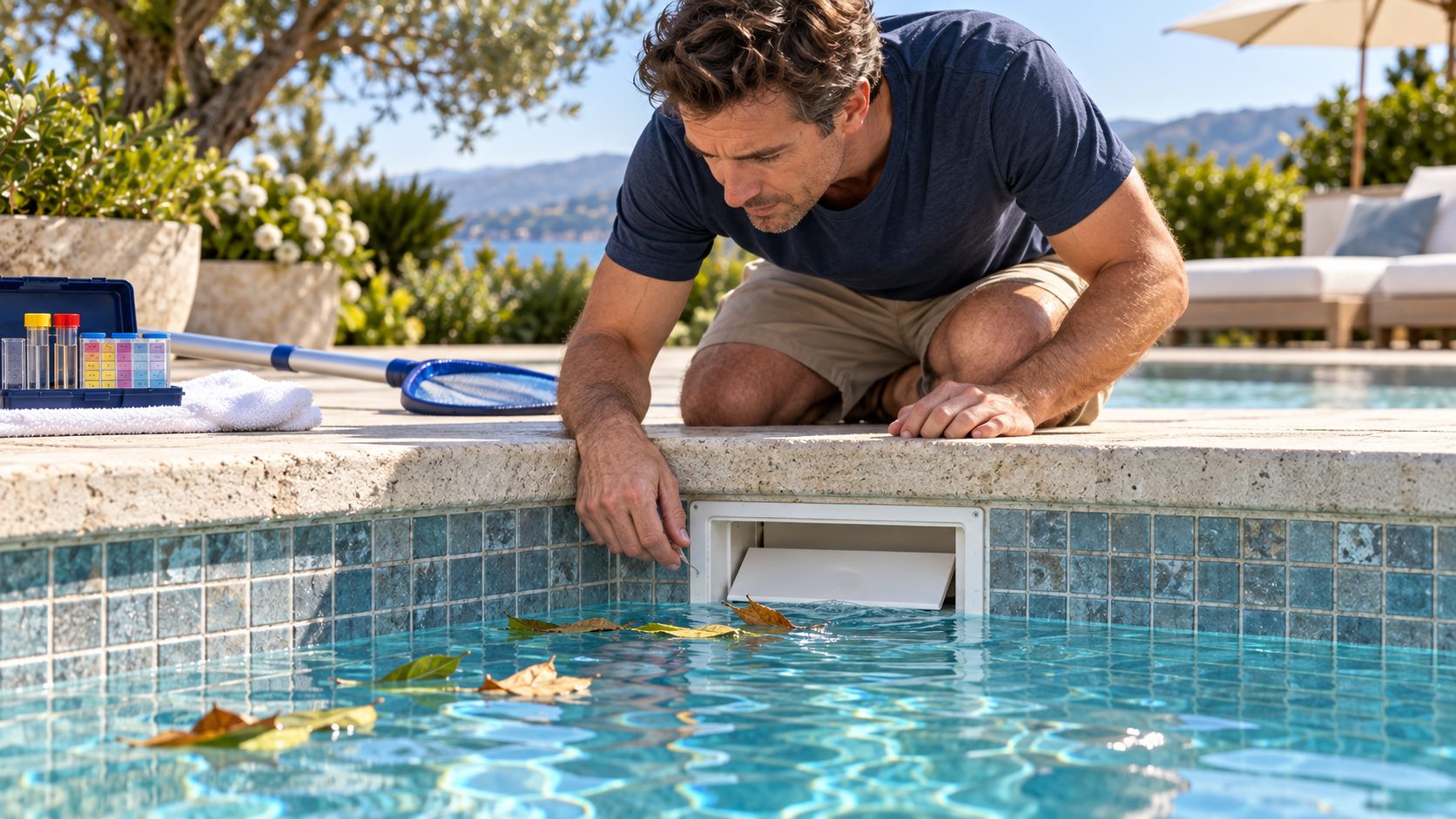
Disclosure: This article contains Amazon affiliate links. As an Amazon Associate, Clean Water Pools may earn from qualifying purchases. A skimmer weir door is a small part with an outsized effect on surface cleaning. When it floats and swings correctly, it helps pull the top layer of water into the skimmer instead of letting leaves, pollen, sunscreen film and bugs drift past the opening. When the weir is missing, wedged open, stuck shut or matched to the wrong skimmer body, …
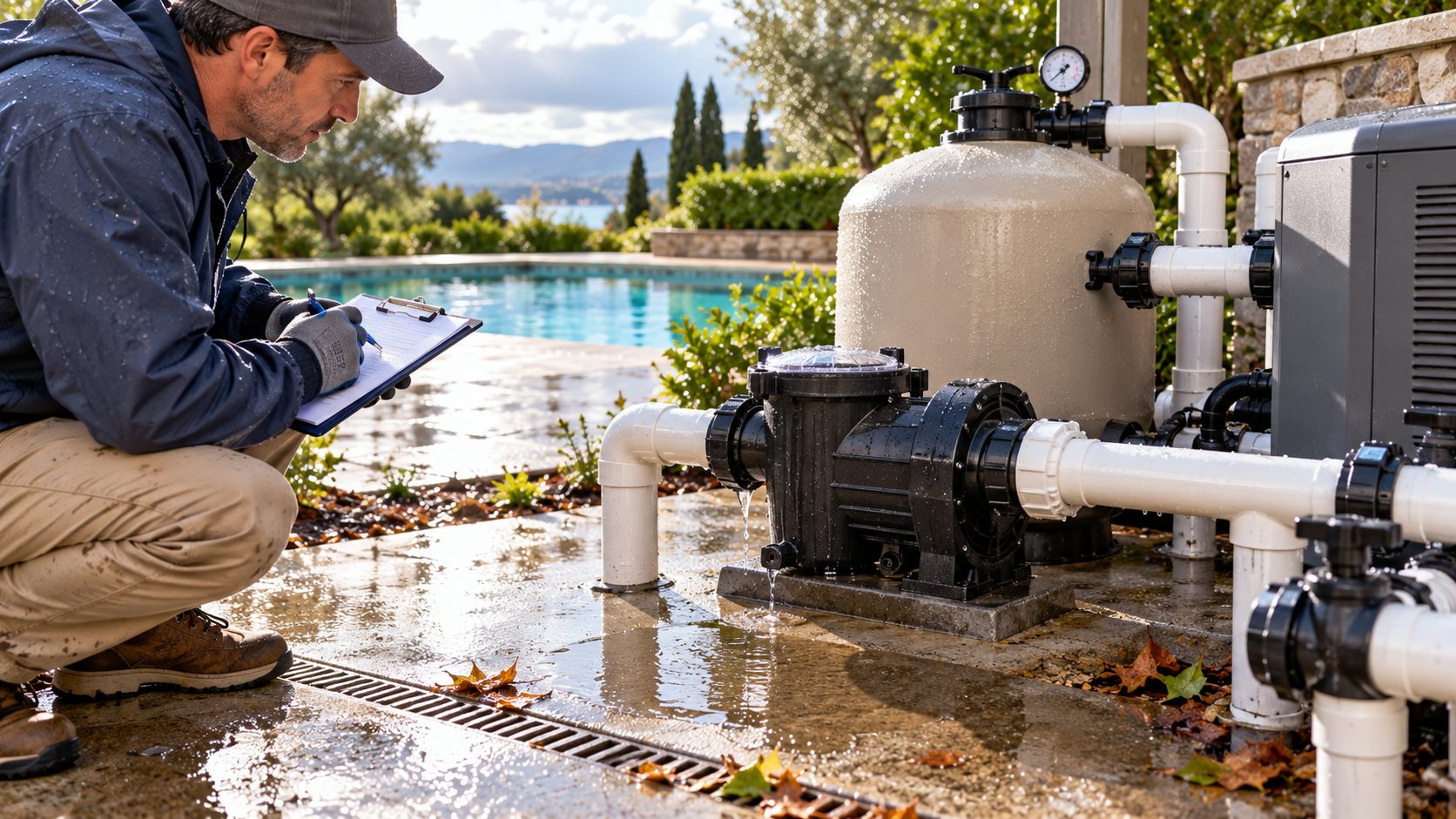
Disclosure: This article contains Amazon affiliate links. As an Amazon Associate, Clean Water Pools may earn from qualifying purchases. Heavy rain makes a pool equipment pad hard to read. Everything is wet, the concrete has puddles, leaves collect around the drain, and a real plumbing leak can hide inside the mess. The trick is to separate stormwater from water that appears only when the pool system is running. This checklist is for the first calm inspection after the rain passes. …
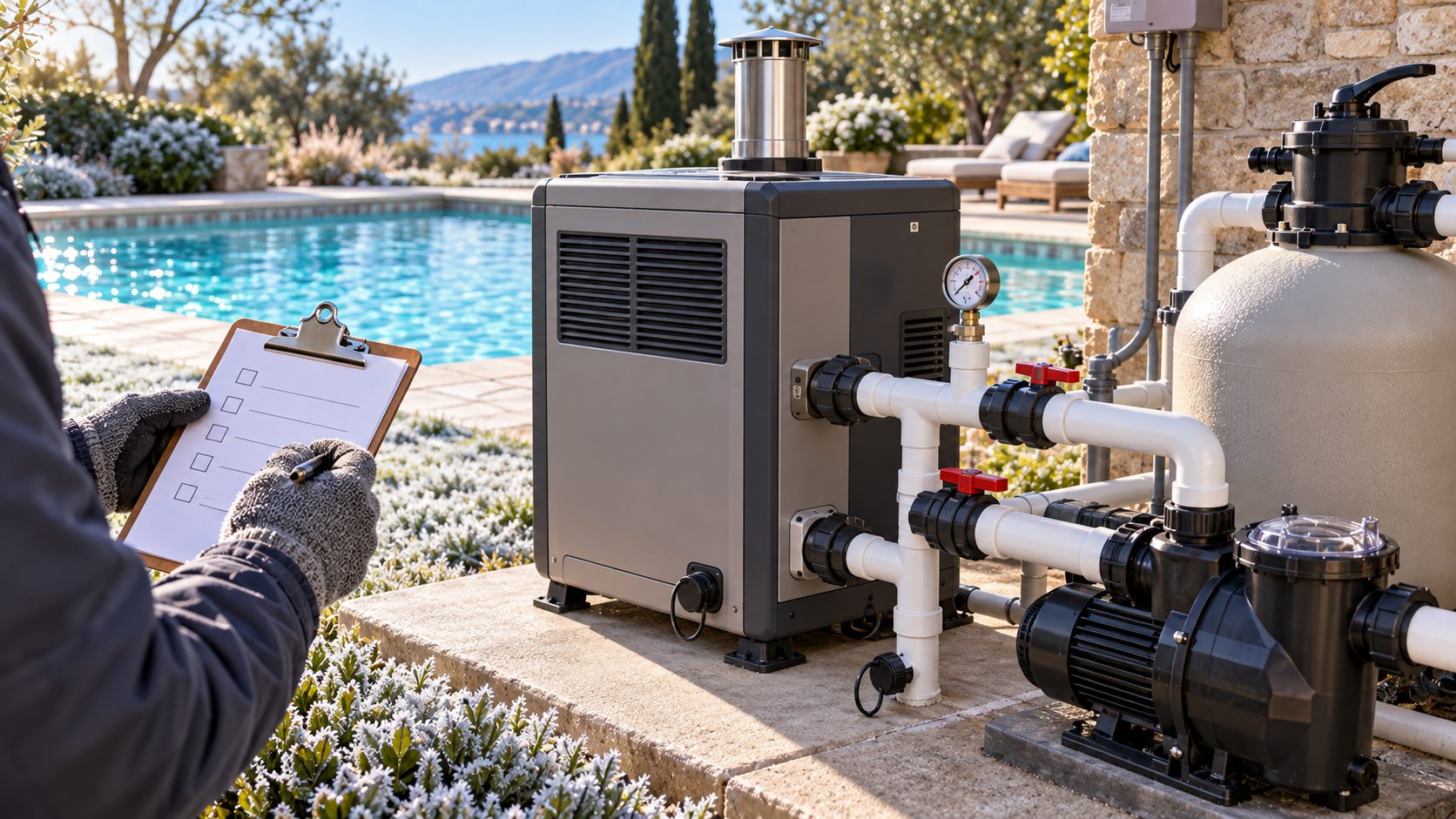
Disclosure: This article contains Amazon affiliate links. As an Amazon Associate, Clean Water Pools may earn from qualifying purchases. A pool heater freeze warning is not a chemistry problem, and it is not something to solve by turning every setting higher. It is a trapped-water problem. When cold weather reaches the equipment pad, the question is simple: is water still sitting inside the heater, pump, filter, valves, or plumbing where it can freeze and expand? This checklist is for the …
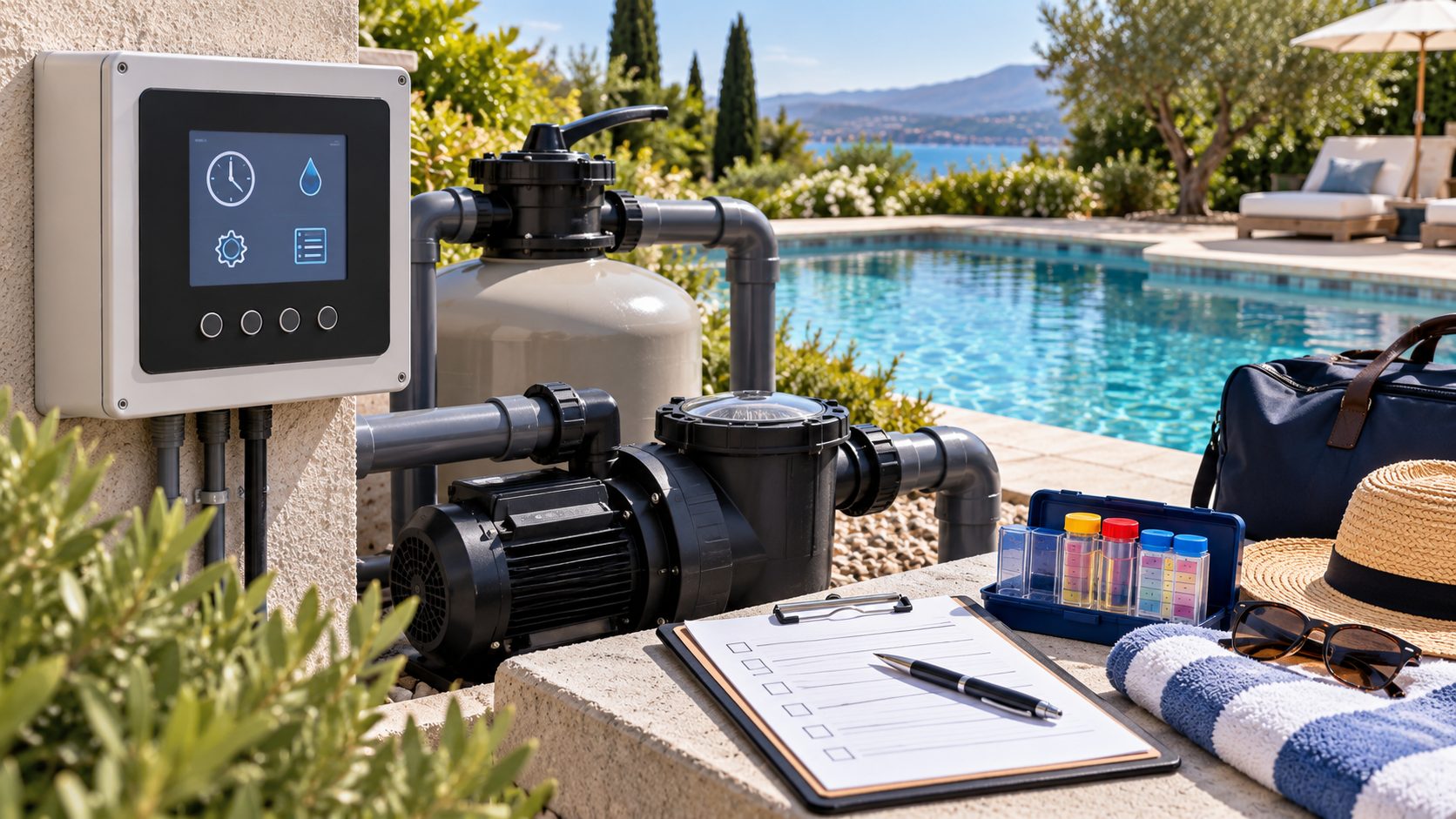
Disclosure: This article contains Amazon affiliate links. As an Amazon Associate, Clean Water Pools may earn from qualifying purchases. Pool automation makes vacation prep easier, but it can also hide a bad setting until nobody is home to notice. Before you leave town, spend half an hour proving that the schedule still matches the pool, the equipment, and the person who may check on things while you’re gone. The point is not to build a complicated remote-control system the night …
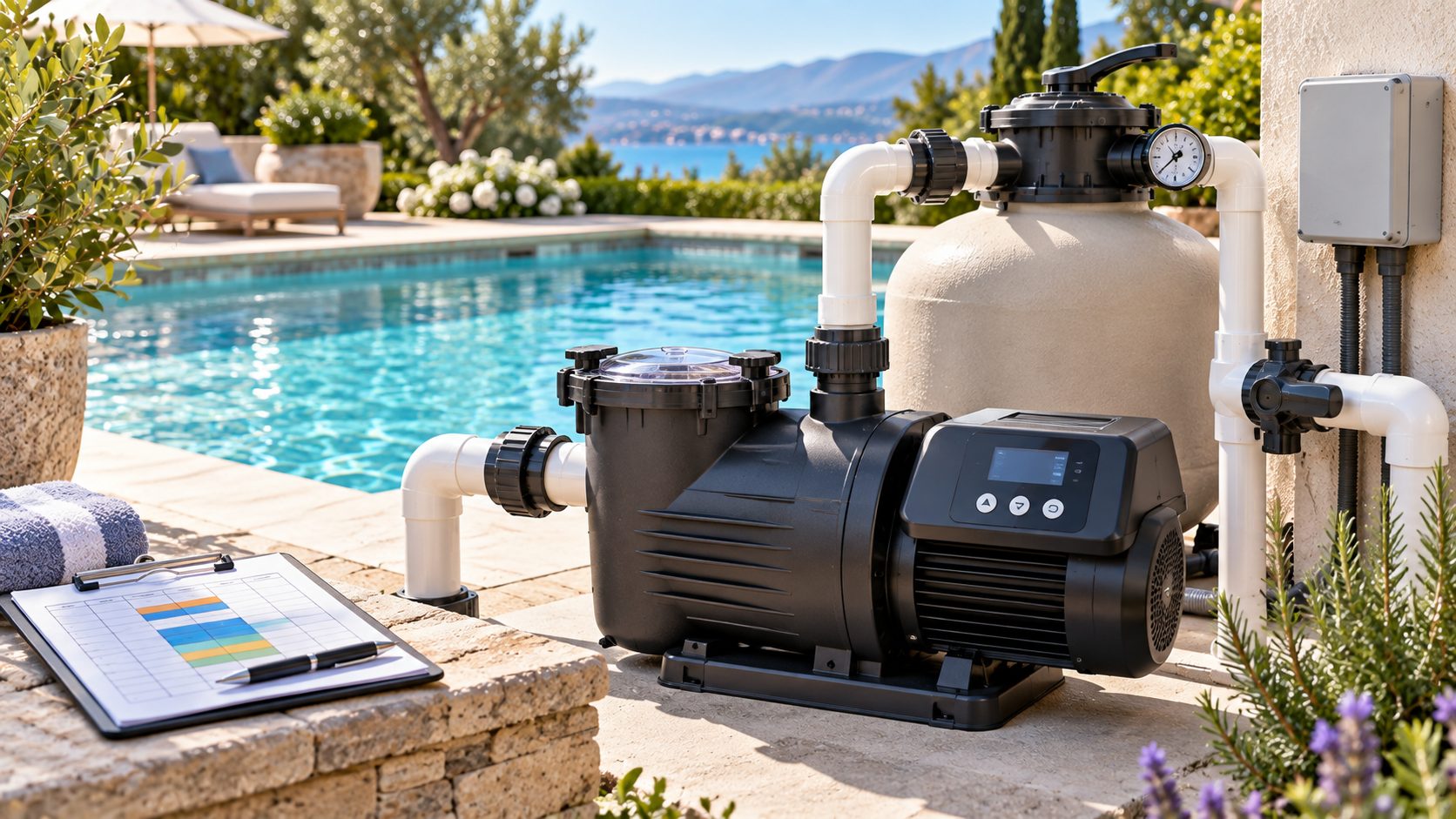
Disclosure: This article contains Amazon affiliate links. As an Amazon Associate, Clean Water Pools may earn from qualifying purchases. A variable speed pool pump schedule should not be a guess you set once and forget. The whole advantage is that the pump can run slowly for routine filtration, then step up when the pool needs real surface skimming, heating flow, cleaner movement, freeze protection, or better mixing after chemical changes. For this article I used the queued CleanWaterPools topic helper …
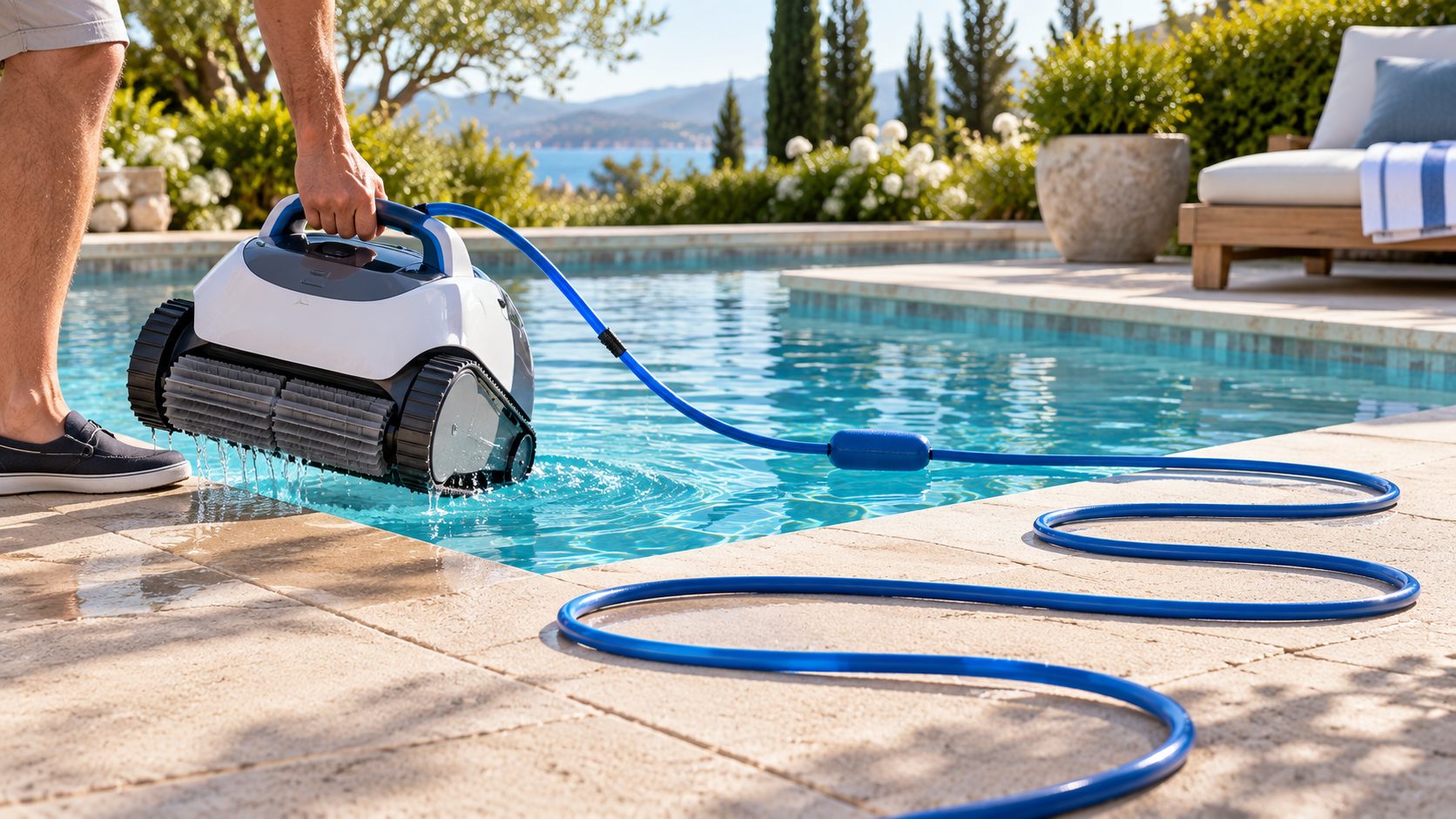
Disclosure: This article contains Amazon affiliate links. As an Amazon Associate, Clean Water Pools may earn from qualifying purchases. A robotic pool cleaner cable takes more abuse than most owners realize. It gets dragged across coping, stepped over on the deck, stored in tight loops, and asked to follow a machine that changes direction for an hour or two at a time. When that cable starts twisting, the cleaner may still run, but coverage can get uneven and the cord …