# Pool Circulation Problems: How to Find Dead Spots Before Algae Starts
Pool circulation problems usually show up quietly. One corner gets dusty. Steps feel a little slick. A ladder area turns green before the rest of the pool. The water may test fine near the surface, but algae still starts in the same stubborn place.
That is a dead spot problem.
Good circulation moves sanitizer, heat, and filtered water through the whole pool. Poor circulation leaves pockets where chlorine is weaker, debris settles, and algae gets a head start. The fix is part equipment, part return-jet adjustment, and part brushing.
## What a pool dead spot looks like
A dead spot is an area where water movement is weak. It does not always look dramatic. In fact, the pool may look mostly clear while one section keeps causing trouble.
Common signs include:
– Dust collecting in the same corner
– Algae behind ladders or steps
– Cloudiness near the deep end floor
– Debris floating past the skimmer
– Slick walls in shaded areas
– Weak return flow
– Chemical readings that seem okay but algae still appears
If a problem keeps returning to the same location, look at circulation before adding another random chemical.
## Check the skimmer action first
Skimmers remove floating debris before it sinks. If the water level is too high or too low, skimming suffers.
The water should usually sit around the middle of the skimmer opening. If it is too high, debris can float past the opening. If it is too low, the skimmer may pull air and the pump can lose prime.
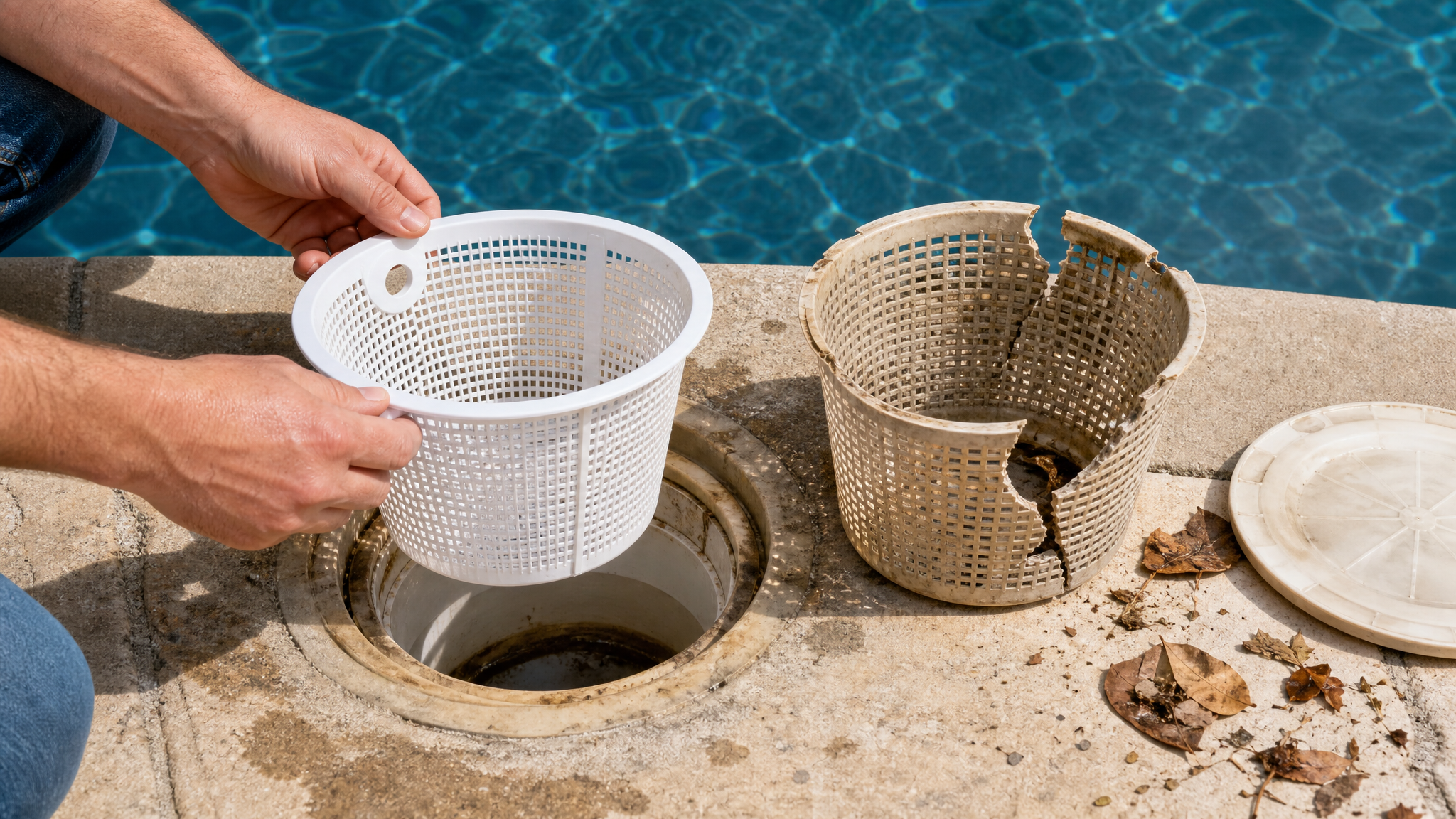
Also check the weir door, the little flap inside the skimmer. If it sticks, breaks, or gets jammed, surface debris may not pull in correctly.
## Empty baskets and inspect the pump
Circulation starts with flow. A full skimmer basket, clogged pump basket, dirty cleaner canister, or blocked suction line can reduce water movement across the whole pool.
Before changing chemicals, check:
– Skimmer baskets
– Pump basket
– Cleaner bag or cartridge
– Pump lid gasket
– Water level
– Visible air in the pump basket
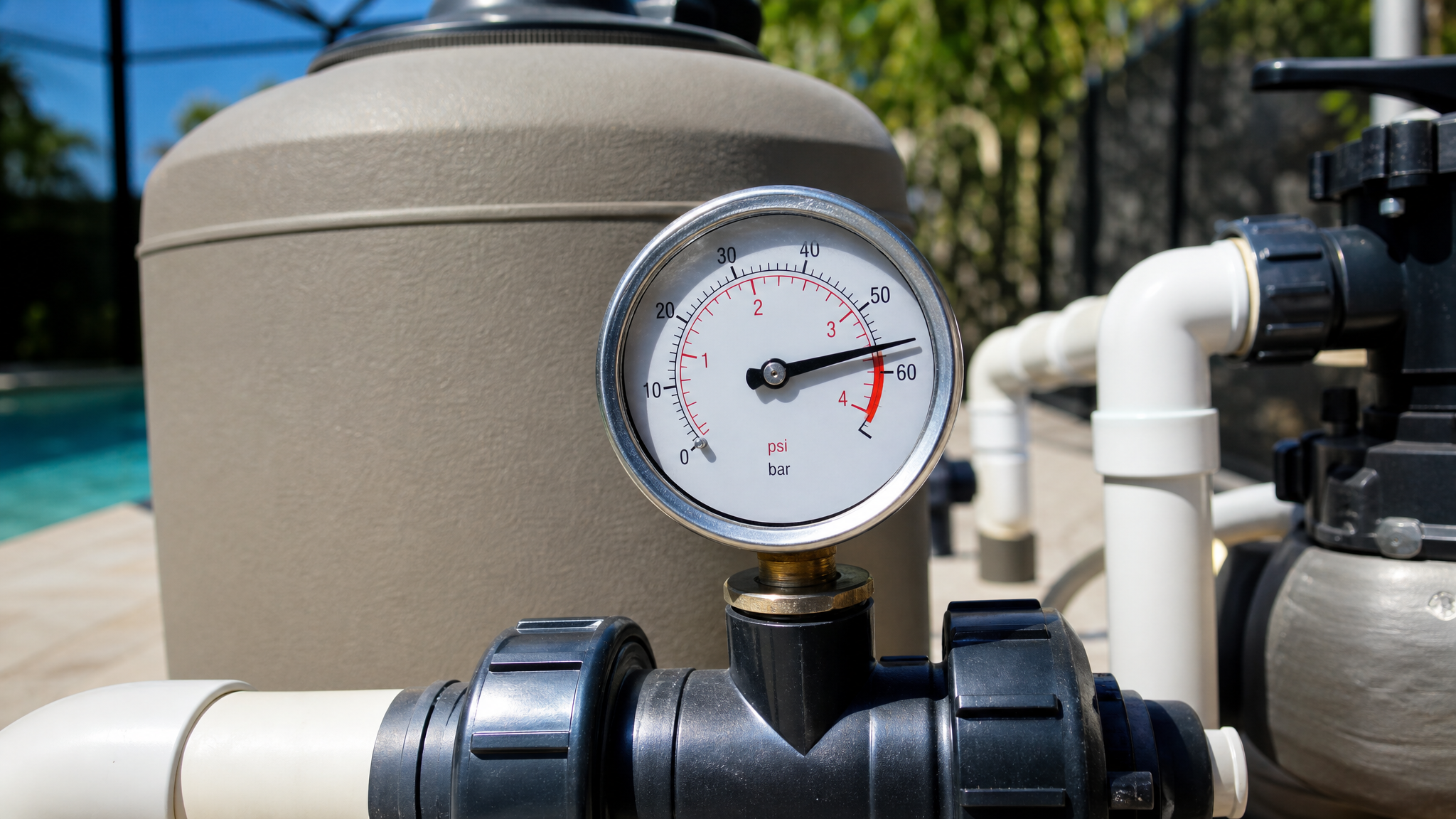
– Filter pressure
Air bubbles returning to the pool can point to a suction-side air leak. Low return flow can point to clogged baskets, dirty filters, valve issues, or pump problems.
## Read the filter pressure
Filter pressure tells you a lot about flow. A pressure reading higher than normal often means the filter is dirty and restricting water movement. A pressure reading much lower than normal may mean low water, a clogged basket, a suction restriction, or a pump issue.
Know your clean filter pressure. When pressure rises about 20–25% above clean pressure, clean or backwash the filter based on the filter type.
Do not ignore weak flow just because the water is still blue. Poor filtration can let fine debris and algae build up slowly.
## Aim return jets for a circular pattern
Return jets should help move water around the pool, not blast straight across one small area. In many pools, a gentle circular pattern works well because it carries surface debris toward the skimmer and reduces stagnant corners.
Try this:
– Aim returns slightly downward
– Angle them in the same general direction
– Watch how leaves or small debris move
– Adjust one jet at a time
– Recheck the next day
You are looking for steady movement, not turbulence. Too much surface splash can drive pH upward and waste energy.
Download Pool Chemical Calculator for iPhone | Get Pool Chemical Calculator for Android
## Brush the places water does not reach well
No return-jet setup reaches every surface perfectly. Steps, ladders, corners, benches, light niches, and wrinkles in vinyl liners often need brushing.
Brushing breaks up film and moves stagnant water. It also exposes algae to chlorine instead of letting it hide under biofilm.
Brush these areas at least weekly:
– Steps and tanning ledges
– Behind ladders
– Corners and coves
– Around lights
– Under skimmer throats
– Behind return fittings
– Shaded walls
If algae has appeared, brush daily during cleanup.
## Run the pump long enough
Pump runtime depends on pool size, plumbing, pump speed, temperature, swimmer load, debris load, and filter condition. There is no single perfect number for every pool.
In warm weather, heavy rain, or heavy swimming, the pool usually needs more circulation. If a pool has recurring dead spots, increasing runtime may help, especially when combined with better return direction and brushing.
For variable-speed pumps, longer low-speed operation often gives steady circulation while using less energy than short high-speed runs. Still, make sure skimming and cleaners work properly at the selected speed.

Clean Water Pools may earn from qualifying Amazon purchases.
## Watch automatic cleaner patterns
Automatic cleaners can help circulation, but they can also miss the same areas repeatedly. Some cleaners park in one corner, avoid steps, or fail to climb certain walls.
Watch a full cleaning cycle occasionally. If the cleaner skips a section, brush that area manually. Do not assume the robot or suction cleaner reaches everything just because it runs every day.
Cleaner hoses can also affect flow. A poorly placed hose may block skimmer action or keep debris trapped in one part of the pool.
## Test in more than one spot
If you suspect circulation problems, compare water movement and test results from different areas. Take one sample near the deep end and another near the return or steps. The readings may be similar, but the exercise can reveal where water is not mixing well.
Also pay attention when adding chemicals. If a chemical cloud lingers in one area instead of dispersing, circulation may be weak there.
## When circulation is not the only issue
Dead spots make algae more likely, but chemistry still matters. High pH, low free chlorine, high CYA, poor filtration, and warm water can all make circulation problems worse.
If algae keeps returning, check:
– Free chlorine
– Combined chlorine
– pH
– CYA/stabilizer
– Filter pressure
– Pump runtime
– Return direction
– Brushing habits
Use Pool Chemical Calculator after testing so chemical corrections match your actual readings.
## Quick circulation checklist
Use this list when the same area keeps getting dirty or green:
1. Check water level.
2. Empty skimmer and pump baskets.
3. Inspect the skimmer weir door.
4. Check pump lid and air bubbles.
5. Read filter pressure.
6. Clean or backwash the filter if needed.
7. Aim returns for circular movement.
8. Brush dead spots manually.
9. Watch the cleaner pattern.
10. Test chlorine, pH, and CYA.
11. Increase pump runtime during heat or heavy use if needed.
## FAQ
### What causes dead spots in a pool?
Dead spots come from weak water movement. Common causes include poor return direction, low pump flow, dirty filters, blocked baskets, pool shape, ladders, steps, and areas the cleaner does not reach.
### Should pool return jets point up or down?
A slight downward angle often helps mix the water while still creating surface movement toward the skimmer. Avoid aiming every jet straight up unless you need extra aeration.
### Can poor circulation cause algae?
Poor circulation does not create algae by itself, but it creates areas where chlorine is weaker and debris collects. That makes algae more likely to start.
### How do I know if my pool filter is restricting flow?
Compare the pressure gauge to clean filter pressure. If pressure is about 20–25% higher than clean pressure, the filter likely needs cleaning or backwashing.
### Do robotic cleaners fix circulation problems?
Robotic cleaners help remove debris, but they do not replace pool circulation. You still need good pump flow, return direction, brushing, and balanced water.
## Bottom line
If algae or dirt keeps returning to the same spot, stop treating it like a mystery. Check flow, filter pressure, baskets, return direction, pump runtime, and brushing habits.
Pool Chemical Calculator helps you handle the chemistry side once the water is actually moving where it needs to go.
Download Pool Chemical Calculator for iPhone or get Pool Chemical Calculator for Android.