# High pH and Low Chlorine: Why Your Pool Gets Cloudy Even When You Add Sanitizer
High pH and low chlorine are a bad combination for pool water. Low chlorine gives algae and bacteria room to grow. High pH makes the chlorine you do have less effective. Put them together and a pool can turn dull, cloudy, or green even after you added sanitizer.
This is one of the most common summer pool problems because pH tends to rise from aeration, salt systems, spillovers, swimmers, and chemical additions. Chlorine also disappears faster in hot sun and heavy use.
The fix is not to keep dumping in random shock. Test the water, bring pH into range, restore chlorine based on stabilizer, and then filter long enough for the water to recover.
## Why high pH weakens chlorine
Chlorine works best when pH is in range. As pH climbs, a smaller portion of chlorine is in its strongest active form. That means a pool with high pH can have chlorine on the test, but the sanitizer may not work as aggressively as expected.
This is why pool water can look hazy when free chlorine is only slightly low but pH is high. The chlorine is already stretched thin, and the pH makes the job harder.
A practical target for many pools is around 7.4 to 7.6, though your surface, equipment, and chemistry may influence the ideal range.
## Why chlorine drops in the first place
Low chlorine can happen for several reasons. The most common are sunlight, warm water, swimmers, debris, and low stabilizer.
Chlorine gets used up by:
– Sweat and sunscreen
– Leaves and pollen
– Rain and runoff
– Algae starting in dead spots
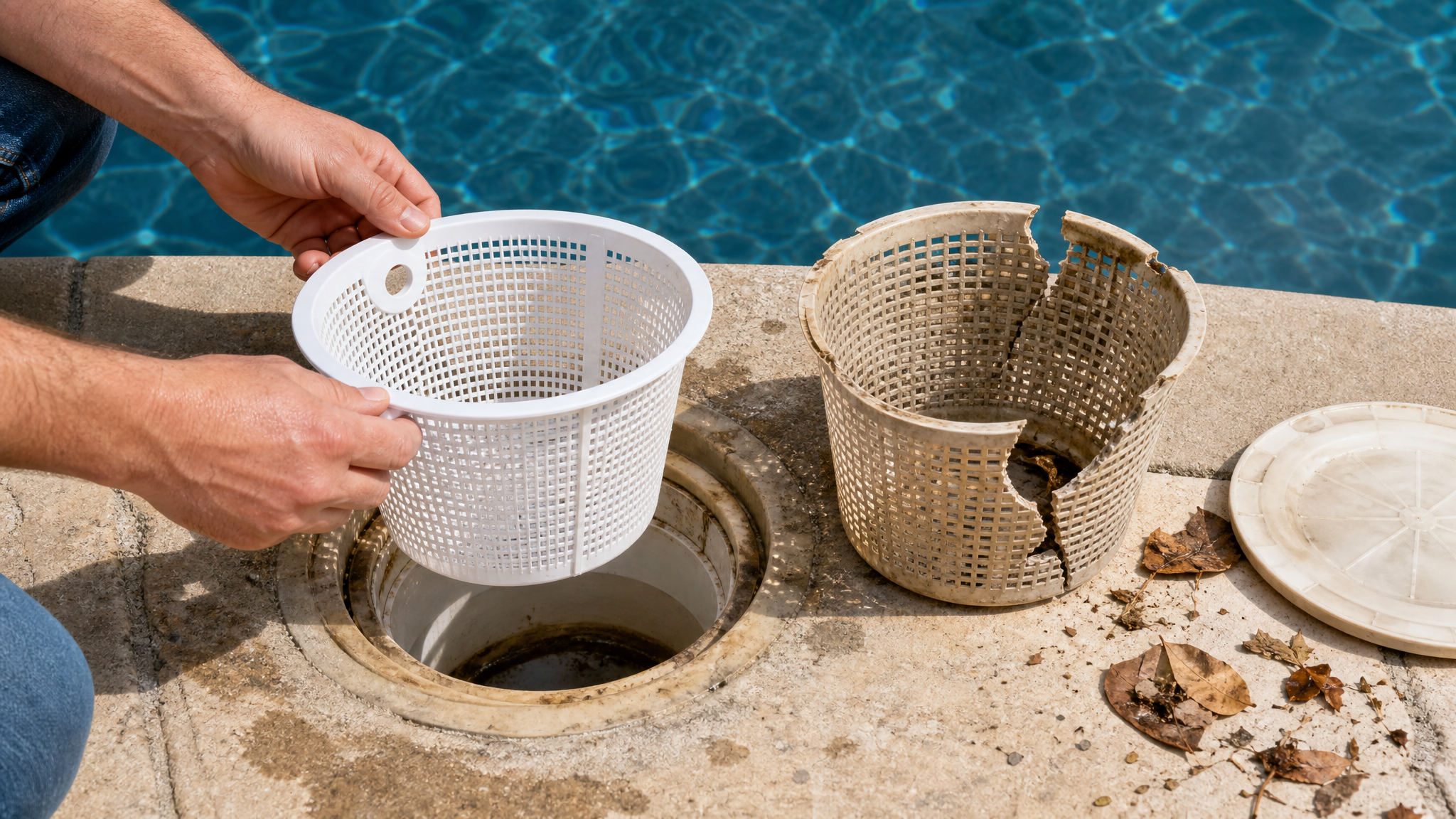
– Organic debris in baskets
– Sunlight when CYA is too low
– Heavy pool parties
If chlorine keeps disappearing fast, test CYA and check the pool for hidden debris or algae. Adding more chlorine helps only if you also fix what is consuming it.
## Check CYA before choosing a chlorine target
CYA, or stabilizer, protects chlorine from sunlight. It also changes how much free chlorine the pool needs. A free chlorine level that works with moderate CYA may be too low when CYA is high.
This matters because many pool owners test chlorine, see a number, and assume the pool is safe. But free chlorine should be judged against stabilizer level.
If CYA is very low, sunlight can burn chlorine off quickly. If CYA is very high, normal chlorine readings may not be strong enough for algae prevention.
## Lower pH before heavy chlorine treatment
If pH is high and chlorine is low, correct pH first in most non-emergency situations. This helps chlorine work better and can make the cleanup more efficient.
Use a pool-safe acid product according to the label. Add it with the pump running, circulate the water, and retest before making another adjustment.
Do not mix acid and chlorine together. Add chemicals separately and give each one time to disperse.
Download Pool Chemical Calculator for iPhone | Get Pool Chemical Calculator for Android
## Bring chlorine back into range
After pH is reasonable, raise free chlorine to the right target for your CYA level. If the water is only slightly dull and no algae is visible, a normal chlorine correction may be enough.
Shock may be needed if:
– Free chlorine is zero
– Combined chlorine is high
– Water is cloudy or green
– Algae is visible
– The pool had heavy swimmer load
– Debris sat in the pool for a long time
Use fresh chlorine and dose based on gallons. Weak old chlorine or guessed pool volume can make treatment look like it failed.
## Brush and filter during recovery
Chemistry starts the cleanup, but brushing and filtration finish it. Brush walls, steps, ladders, corners, and the waterline so chlorine reaches film and algae hiding on surfaces.
Run the pump longer than usual while the water clears. Watch filter pressure and clean or backwash when pressure rises about 20–25% above clean pressure.
Cloudiness after treatment can be dead algae, fine debris, high pH, calcium scale, or poor filtration. Give the filter time, but do not ignore pressure or weak return flow.
Clean Water Pools may earn from qualifying Amazon purchases.
## Why pH keeps rising
If pH rises every week, there is usually a reason. Common causes include high total alkalinity, aeration, spillovers, fountains, deck jets, saltwater chlorine generators, and fresh plaster curing.
Aeration drives carbon dioxide out of the water, which can raise pH. Saltwater pools often see steady pH rise because of generator operation and water movement.
If pH constantly climbs, test total alkalinity. Lowering alkalinity carefully may slow pH rise, but do it gradually and based on test results.
## Avoid adding clarifier too early
Clarifier is tempting when the pool is cloudy, but it should not be the first move when pH is high and chlorine is low.
Fix sanitizer and pH first. Clean the filter. Brush the pool. Let the system circulate. If the water is balanced and filtered but still slightly hazy, then clarifier may be worth considering.
Using clarifier before correcting the real problem can waste money and sometimes gum up filters.
## Simple fix-it order
When pH is high and chlorine is low, use this order:
1. Remove debris and empty baskets.
2. Test free chlorine, combined chlorine, pH, alkalinity, and CYA.
3. Lower pH into range if it is high.
4. Raise chlorine based on CYA level.
5. Brush walls, steps, ladders, and corners.
6. Run the pump longer than usual.
7. Clean or backwash the filter as pressure rises.
8. Retest the next day.
9. Adjust alkalinity if pH keeps rising.
Use Pool Chemical Calculator to calculate the pH and chlorine amounts from real readings.
## FAQ
### Can high pH make chlorine less effective?
Yes. As pH rises, chlorine becomes less effective at sanitizing and killing algae. That is why high pH and low chlorine often lead to cloudy or green water.
### Should I fix pH or chlorine first?
If pH is high and there is no immediate safety emergency, lower pH first so chlorine can work better. Then raise chlorine based on the CYA level.
### Why is my pool cloudy even after adding chlorine?
Cloudiness can come from high pH, low chlorine, dead algae, poor filtration, high calcium, dirty filters, or circulation problems. Test and inspect before adding more products.
### Does shock raise or lower pH?
It depends on the chlorine product. Some products can affect pH or calcium. Always test pH before and after treatment and follow the product label.
### What pH is best for chlorine to work?
Many pools operate well around pH 7.4 to 7.6. The best target can vary based on pool surface, alkalinity, calcium, and equipment.
## Bottom line
High pH and low chlorine make cloudy water more likely because chlorine is both underpowered and under-supplied. Lower pH into range, dose chlorine based on CYA, brush the pool, and let the filter work.
Pool Chemical Calculator helps turn the test numbers into accurate corrections instead of chemical guesswork.
Download Pool Chemical Calculator for iPhone or get Pool Chemical Calculator for Android.