# Cloudy Pool After Shocking? What It Means and How to Clear It
A cloudy pool after shocking is frustrating because shock is supposed to fix the problem, not make the water look worse. The good news: cloudy water after shock is often normal for a short time. The bad news: if it stays cloudy for more than a day or two, something is still off.
Most cloudy-after-shock problems come down to one of five things: dead algae in the water, weak filtration, pH being out of range, not enough chlorine for the actual problem, or too much combined junk for the pool to clear quickly.
Here’s how to tell which one you’re dealing with, and what to do next.
## Is cloudy water after shock normal?
Yes, sometimes. When shock kills algae or oxidizes waste, the leftovers can make the water look dull, gray, or milky. Your filter has to catch that material. If the pump and filter are working well, the pool should usually start improving within 12–24 hours.
If the water looks worse the morning after shocking but the chlorine is still high and the filter pressure is rising, that may simply mean the shock is doing its job. Keep the pump running, brush the pool, and clean the filter as needed.
If the water stays cloudy for 48 hours, don’t keep throwing in random bags of shock. Test first.
## Step 1: Test the water before adding anything else
Cloudy water is not a diagnosis. It’s a symptom. Before adding more chemicals, test:
– Free chlorine
– Combined chlorine
– pH
– Total alkalinity
– Stabilizer/CYA
– Calcium hardness
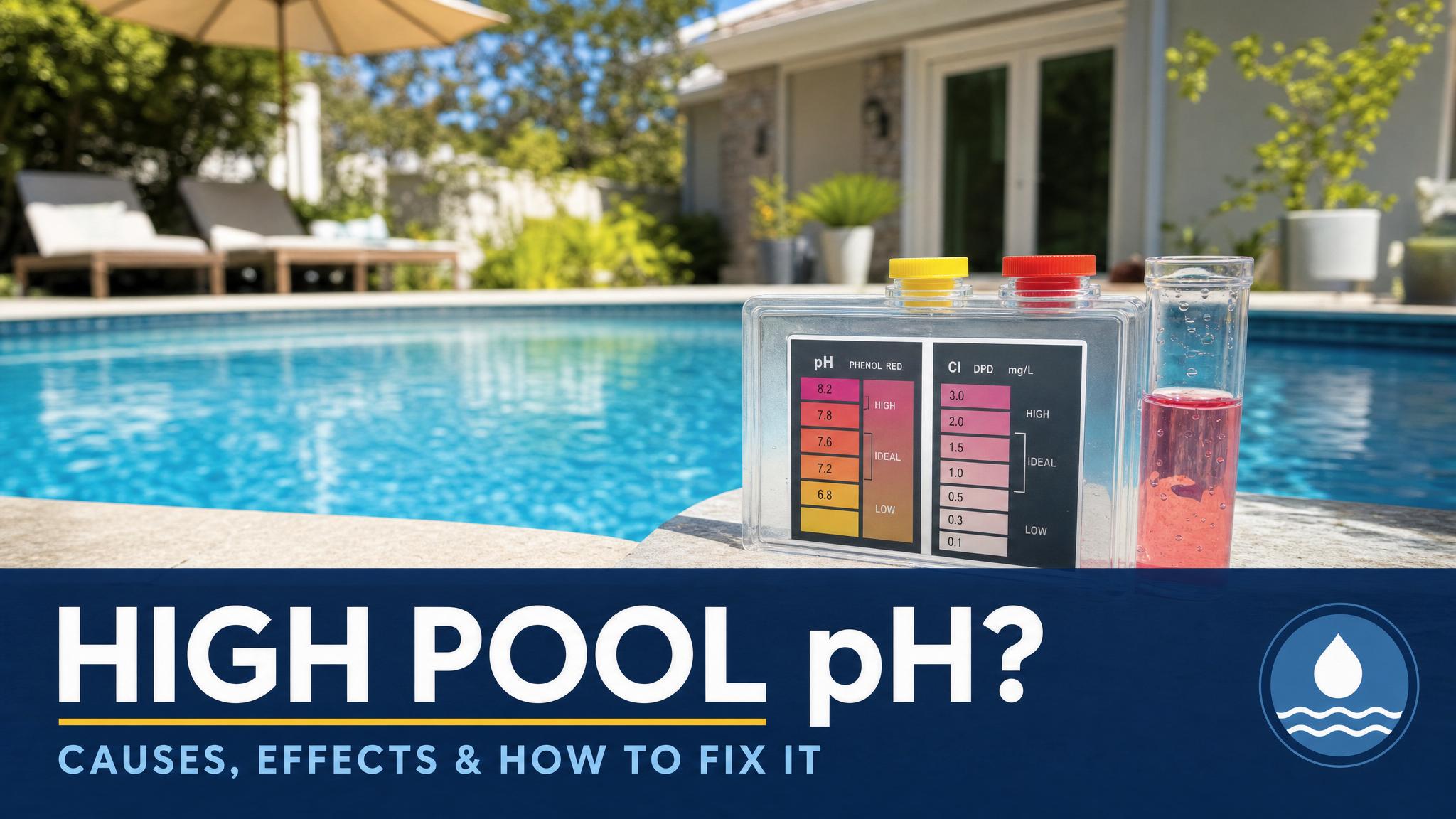
pH matters more than people think. When pH is high, chlorine works less effectively, and cloudy water can linger. For most pools, aim for pH around 7.2–7.6 while clearing a problem.
CYA matters too. If stabilizer is high, normal shock doses may be too weak. A pool with 30 ppm CYA and a pool with 90 ppm CYA do not respond the same way.
## Step 2: Run the pump long enough
After shocking, the pump should usually run continuously until the water clears. That means 24 hours a day during cleanup, not just the normal timer schedule.
Watch filter pressure. If pressure rises 20–25% above clean starting pressure, backwash a sand or DE filter, or rinse/clean a cartridge filter. A dirty filter can’t clear dead algae efficiently.
Also check the simple stuff:
– Skimmer basket clear?
– Pump basket clear?
– Water level halfway up the skimmer opening?
– Return jets moving water in a circular pattern?
– Filter valve fully in the right position?
A pool can have perfect chemistry and still look cloudy if the water is barely circulating.
Download Pool Chemical Calculator for iPhone | Get Pool Chemical Calculator for Android
## Step 3: Brush the pool, even if it looks clean
Brushing breaks up algae film and pushes fine debris into circulation. Hit the walls, floor, steps, ladders, corners, behind lights, and around returns. If you skip brushing, shock may kill what it reaches while leaving stubborn patches in low-flow areas.
For vinyl and fiberglass pools, use the right brush so you don’t damage the surface. For plaster pools, a nylon or combo brush is usually fine.
## Step 4: Decide whether you need more chlorine or more filtration
This is the part that saves money.
If free chlorine drops to near zero overnight and the water is still cloudy, the pool is still consuming chlorine. That usually means algae, organics, or contamination are still present. You may need another properly calculated shock dose.
If free chlorine holds overnight but the water is cloudy, the problem is more likely filtration. Keep filtering, brush daily, clean the filter, and consider a clarifier only after chemistry is in range.
A simple overnight chlorine loss test helps:
1. Test free chlorine after sunset.
2. Run the pump overnight.
3. Test again before sunlight hits the pool.
4. If chlorine drops more than about 1 ppm, something is still being oxidized.
That’s a useful clue before you add more product.

Clean Water Pools may earn from qualifying Amazon purchases.
## Should you use clarifier or flocculant?
Clarifier can help small particles clump together so the filter catches them. It’s best for mild cloudiness when chlorine, pH, alkalinity, and filtration are already under control.
Flocculant is stronger. It drops particles to the floor so you can vacuum them to waste. That can work well, but it’s not a casual product. If you can’t vacuum to waste, or if you have a cartridge filter with no bypass option, floc can create a bigger mess.
My rule: don’t reach for clarifier or floc until you know chlorine is holding and pH is in range. Chemicals can’t compensate for a dirty filter or an algae problem that’s still active.
## Common mistakes that keep the pool cloudy
### Shocking with pH too high
High pH slows chlorine down. If pH is 8.0 or higher, lower it before shocking unless product directions say otherwise.
### Not checking stabilizer
High CYA changes the chlorine level needed to clear algae. If stabilizer is sky-high, repeated normal shock doses may barely move the needle.
### Turning the pump off too soon
After shock, the filter needs time. Cutting the pump back to a short timer schedule can leave dead algae suspended in the water.
### Cleaning the filter once and calling it done
During cleanup, filters clog faster. You may need to backwash, rinse, or clean cartridges more than once.
### Adding too many products at once
Shock, clarifier, algaecide, phosphate remover, pH adjuster, and floc all dumped together is not a plan. It’s soup. Test, adjust one problem at a time, and let the pool circulate.
## How long should clearing take?
A mildly cloudy pool may clear overnight. A pool that was green, swampy, or full of dead algae can take several days of brushing, filtering, and cleaning the filter.
If the water is not improving after 48 hours, check three things first: chlorine loss overnight, filter performance, and CYA level. Those three usually explain the delay.
You can also use the calculators at Pool Chemical Calculator to double-check chemical amounts before adding more shock, acid, or alkalinity increaser.
## FAQ
### Can too much shock make a pool cloudy?
Yes, it can temporarily. High chlorine can oxidize contaminants quickly and leave fine particles in the water. Some calcium-based shock products can also add cloudiness, especially if calcium hardness and pH are already high.
### Should I shock again if the pool is still cloudy?
Only if testing shows chlorine is being consumed or the pool still has algae. If free chlorine is holding and the water is just hazy, filtration is probably the bigger issue.
### Can I swim in a cloudy pool after shocking?
Don’t swim until chlorine and pH are back in the safe range and you can clearly see the bottom. Cloudy water is a safety risk because swimmers can disappear from view.
### Will a cloudy pool clear on its own?
Sometimes, but only if the chemistry is right and the filter is running well. If pH is high, chlorine is low, or the filter is dirty, waiting won’t fix much.
### Is clarifier safe after shocking?
Usually, yes, but follow the label and use it only after chlorine and pH are in the product’s recommended range. Clarifier works best when the filter is clean and the algae is already dead.
## Bottom line
A cloudy pool after shocking usually needs patience, filtration, and testing more than it needs panic dosing. Keep the pump running, clean the filter, brush thoroughly, and use your test results to decide whether the pool needs more chlorine or just more filter time.
For exact dosing, use Pool Chemical Calculator before adding chemicals. It gives pool-specific amounts for shock, chlorine, pH, alkalinity, calcium, and stabilizer so you’re not guessing.
Download Pool Chemical Calculator for iPhone or get Pool Chemical Calculator for Android.