
Disclosure: This article contains Amazon affiliate links. As an Amazon Associate, Clean Water Pools may earn from qualifying purchases.
A pool main drain safety check is not a repair job. It is a quick, cautious look for warning signs that should keep people out of the water until a qualified pool professional checks the suction outlet.
The danger is easy to underestimate because the drain cover may look like one flat piece of plastic on the floor of the pool. Behind that cover is suction connected to the circulation system. If the cover is missing, cracked, loose, outdated or matched to the wrong sump, the right move is to stop swimming and get trained eyes on it.
Calculate the chemistry change before you add more
Pool problems get expensive when you guess. Use Pool Chemical Calculator to dose acid, chlorine, alkalinity increaser, stabilizer, calcium, and other adjustments from your actual pool volume and test results.
Download the Pool Chemical Calculator app
Use the pool calculator website
Start With the Non-Negotiable Safety Rule
Do not dive down to touch, pry, tighten or test a main drain cover. Do not place a hand, foot, vacuum head, brush, toy or body over a suction fitting to see how strong the pull feels. The Pool & Hot Tub Alliance describes suction entrapment as a person or object becoming stuck to a drain or suction fitting, and its consumer safety guidance says checking drain covers is part of pool safety, not casual maintenance.
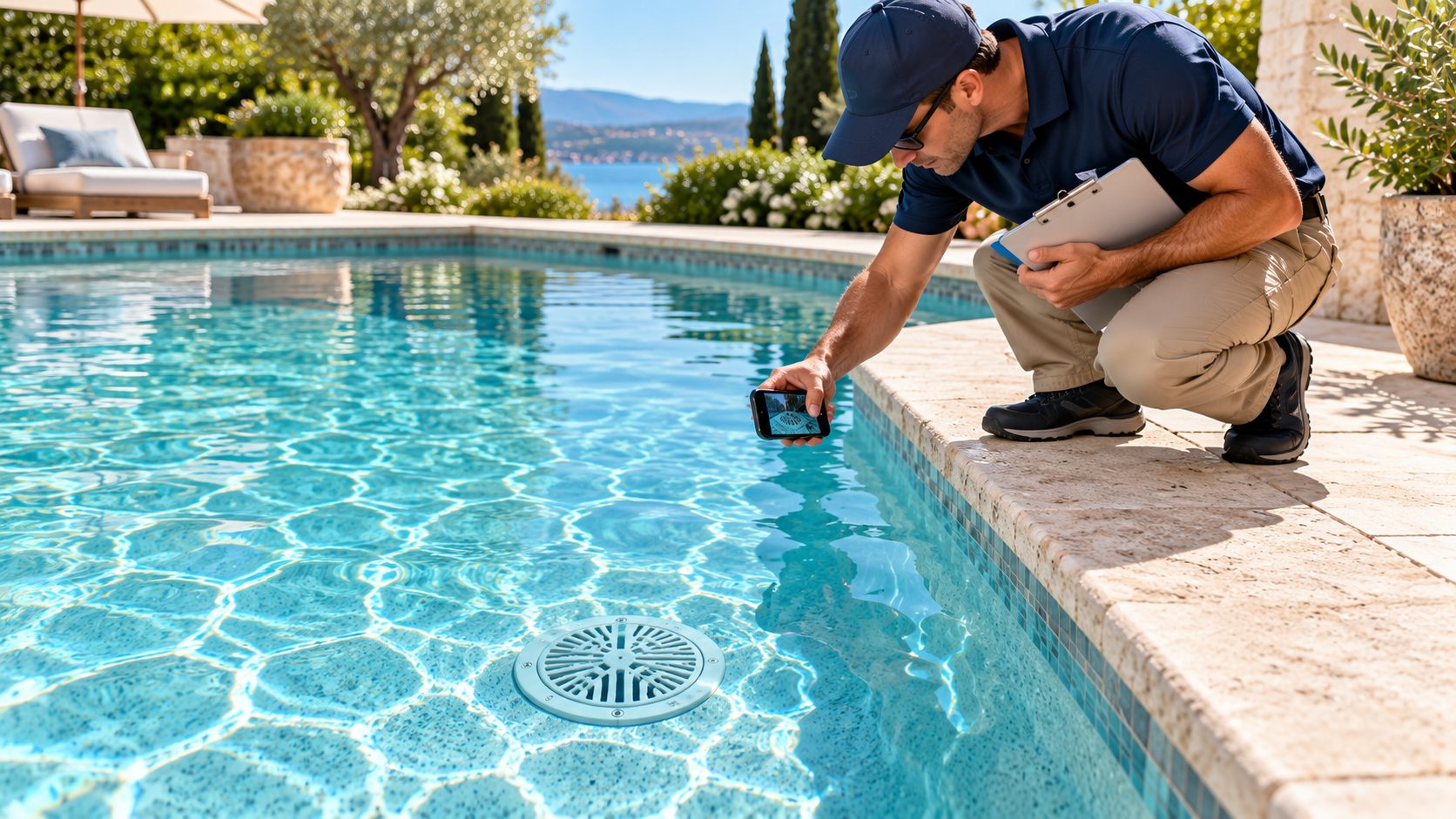
For a homeowner, the inspection starts from the deck. Look through clear water in good daylight. Use a phone zoom photo if it helps. If the water is too cloudy to see the drain cover clearly, that is already a reason to pause swimming, clear the water and avoid guessing about the condition of submerged suction hardware.
What You Can Safely Look For From Above
From the deck, look for a cover that appears fully attached, flat against its frame, free of visible cracks and not missing screws. Also look for obvious movement, a cover sitting crooked, a broken edge, a raised corner, a grate pattern that looks damaged, or debris packed against the fitting.
Do not treat this as a pass/fail certification. A cover can look decent from above and still be the wrong model, past its service life, missing required markings, installed with the wrong screws or paired with plumbing that needs another anti-entrapment layer. Your visual check is only a screen for obvious danger and a way to give a service professional useful photos.
When to Close the Pool Immediately
Keep swimmers out if the drain cover is missing, loose, cracked, broken, visibly moving, held with mismatched hardware, or impossible to see. The International Swimming Pool and Spa Code field checklist says to close a pool or spa to bathers if any suction outlet cover or grate is missing, broken or inoperative. That is blunt guidance, and it is the right standard for a backyard owner too.
Also close the pool if someone reports feeling suction at a drain, if hair or clothing was pulled toward a fitting, if a cleaner or toy repeatedly sticks to the cover, or if the pump begins behaving strangely after someone disturbed a drain area. This is not a moment for one more swim while you wait for parts.
Why the Cover Markings and Fit Matter
The U.S. Consumer Product Safety Commission explains that the Virginia Graeme Baker Pool and Spa Safety Act requires pool and spa drain covers to comply with the applicable performance standard. CPSC recall notices for noncompliant covers also point out a practical detail: required markings matter because they help identify whether a cover is designed and certified for that safety role.
That is why a replacement is not just a same-size lid. A qualified technician needs to match the cover to the sump, screw pattern, flow rating, installation instructions and the pool’s suction design. Generic online parts can be fine for some simple pool maintenance jobs. Main drain covers are different because a bad match can create a real entrapment hazard.
Do Not Assume Two Drains Make Everything Safe
Many modern pools use multiple suction outlets, unblockable designs or secondary anti-entrapment systems to reduce risk. That does not give a homeowner permission to ignore a damaged cover. CPSC guidance for public pools discusses compliant covers and, in some single-drain configurations, secondary systems such as safety vacuum release, automatic shut-off, gravity drainage or suction-limiting vent systems.
Your pool may not follow the exact public-pool rule set, but the safety logic still helps: the system matters as a whole. A missing cover, blocked line, disabled valve, changed pump, winter plug left in place or undocumented plumbing change can alter what the pool is actually doing.
What to Photograph Before Calling Service
If you can do it from a safe dry position, take a wide photo of the pool, a zoomed photo of the drain area, a photo of the equipment pad and pump model, and any paperwork or labels you have for the pool. Note whether the pool has one main drain, two visible drains, wall suction fittings, a dedicated cleaner line, a skimmer-only setup or anything unusual.
Do not remove screws to find a part number underwater. If the cover has readable stamped information in your photo, great. If not, leave it alone. A service company can identify the drain more safely and confirm whether the cover, sump and fasteners belong together.
Useful Supplies for a Safety-First Check
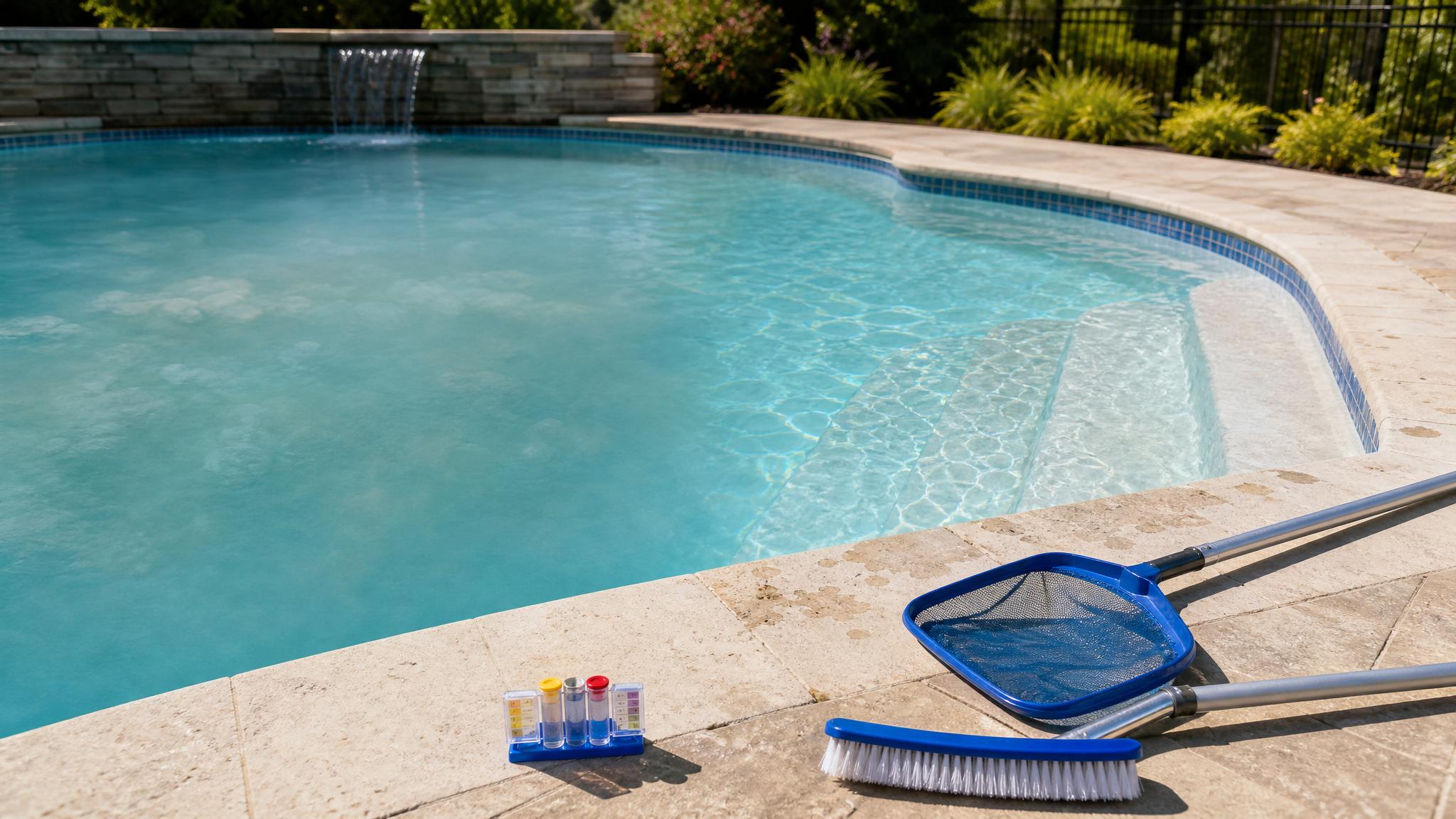
The most useful homeowner tools are simple: a phone camera, a flashlight, a written pool log, a test kit for water clarity issues and basic barriers that keep people out while you wait for service. If you are comparing supplies, shop pool drain cover safety and pool maintenance supplies on Amazon, but do not use an online product listing as proof that a drain cover fits your pool.
Helpful pool supplies
As an Amazon Associate, Clean Water Pools may earn from qualifying purchases.


Clean Water Pools may earn from qualifying Amazon purchases.
Safety and Medical Note
This article is pool-care information, not medical, electrical, plumbing, legal or professional repair advice. Keep swimmers out of the water when a suction outlet cover is missing, cracked, loose, inoperative or impossible to inspect clearly. Do not reach into suction openings, do not test suction with any body part, and do not attempt underwater drain repair unless you are properly trained and qualified. Call a qualified pool professional for drain covers, suction plumbing, electrical issues, pump behavior changes or any safety condition you cannot verify from the deck.
Research Note
Factual guidance for this article was checked against the CPSC pool and spa drain cover guidance, the Pool & Hot Tub Alliance drain cover safety page, the International Swimming Pool and Spa Code suction-entrapment field checklist, a CPSC VGBA compliance reminder, and recent CPSC drain cover enforcement warnings. I kept the recommendations homeowner-safe because drain cover selection and installation depend on the exact cover, sump, screws, flow rating and suction design.
FAQ
Can I swim if the main drain cover is cracked?
No. Treat a cracked, loose, missing or unreadable suction cover as a pool-closed condition until a qualified pool professional inspects and repairs it.
Can I replace a pool main drain cover myself?
This is safety-critical underwater work. The cover has to match the sump, fasteners, flow rating and installation instructions. Hire a qualified pool professional instead of guessing from a photo or online size chart.
What if the pool has two main drains?
Two visible drains may reduce certain risks when the system is designed and maintained correctly, but they do not make a broken or missing cover acceptable. Close the pool and have the damaged cover checked.
Should I turn off the pump if I find a damaged drain cover?
Keep swimmers out first. If you can shut the pool system down safely from the equipment pad or control panel, do that and call service. Do not reach near the drain or put anyone in the water to investigate.
Bottom line: a main drain safety check is about recognizing danger early, not proving the pool is certified safe. If the cover looks wrong, close the pool and bring in a pro.
After the safety issue is handled, test the water and use the Pool Chemical Calculator app or poolchemicalcalculator.com before adding chemicals.