
Disclosure: This article contains Amazon affiliate links. As an Amazon Associate, Clean Water Pools may earn from qualifying purchases.
A pool ladder and handrail inspection is one of those spring checks that feels small until someone grabs a rail that moves. Do it before swim season, while the deck is quiet and there is time to order parts or call service.
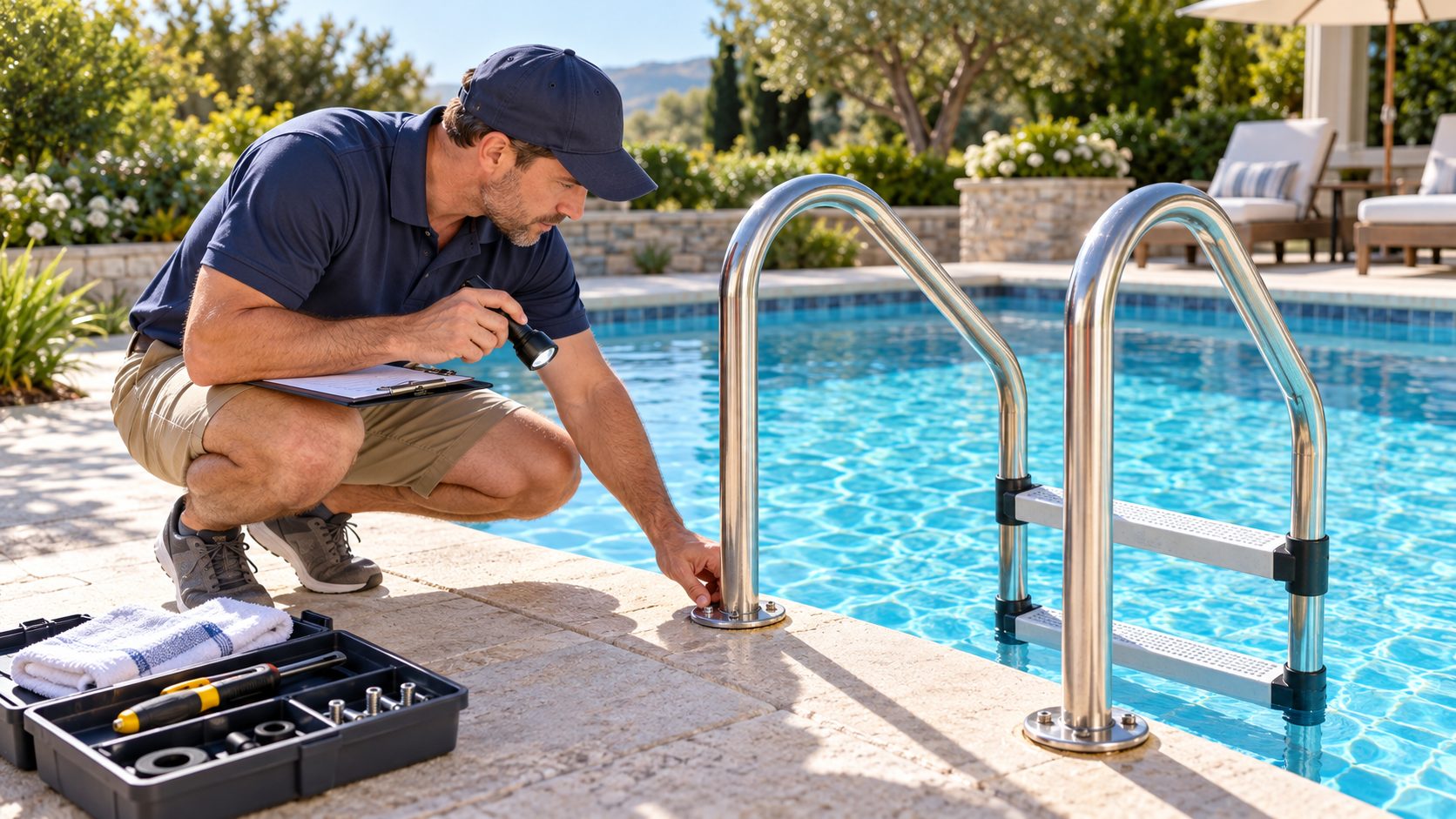
This is not about yanking on a rail to prove it is strong. It is a careful look at contact points, anchors, treads, bumpers, hardware and corrosion. If anything looks loose, sharp, cracked or questionable, keep that entry point out of use until it is fixed.
Calculate the chemistry change before you add more
Pool problems get expensive when you guess. Use Pool Chemical Calculator to dose acid, chlorine, alkalinity increaser, stabilizer, calcium, and other adjustments from your actual pool volume and test results.
Download the Pool Chemical Calculator app
Use the pool calculator website
Start With the Access Point, Not the Hardware Bin
Stand back and look at how people actually enter the pool. Inground pools may have stainless rails set into deck anchors, a ladder with underwater treads and wall bumpers, or a stair rail beside built-in steps. Above-ground pools may have an A-frame ladder, deck ladder, gated entry, removable steps or a ladder that is part of a larger barrier plan.
Each setup has a different failure pattern. Deck rails usually show trouble at the anchor cup, escutcheon, wedge, set screw or concrete around the socket. In-pool ladders often show trouble at the treads, rail bends, bumper contact points and underwater fasteners. Above-ground ladders add another issue: access control when the pool is not being supervised.
Check for Wobble Without Stress-Testing the Rail
Use a light, controlled hand check. A rail that shifts at the deck, rocks in the socket, clicks against the anchor or lifts when you pull upward needs attention. Do not stand on a suspect ladder, bounce on a tread or ask a heavier swimmer to test it. That turns a warning sign into a fall risk.
For deck-mounted rails, look for gaps under the escutcheon, missing wedges, loose bolts, cracked concrete, crumbling grout or rust-colored water stains coming from the anchor. S.R.Smith’s rail installation guidance shows the deck anchor as the foundation of the rail system and calls out anchor drainage and bonding details during installation. That is a useful reminder for homeowners: when the socket or surrounding deck looks wrong, the repair is bigger than polishing the visible rail.
Inspect Treads, Steps and Bumpers
Look closely at every tread surface. Cracked plastic, missing end caps, bowed steps, stripped screws, slick algae film, loose anti-slip texture and sharp edges are reasons to close that ladder until it is repaired. On a vinyl-liner pool, check the rubber bumpers where the ladder touches the wall. Missing or hardened bumpers can let metal rub the liner, and a small rub mark can become an expensive leak.
If your ladder has removable treads or adjustable bumpers, use the manufacturer parts list for that exact model. A close-looking aftermarket part may not carry the same fit, load rating, screw pattern or material. The safe move is boring: match the model, follow the manual and replace worn hardware before guests are climbing in and out all weekend.
Do a Corrosion and Surface Hazard Pass
Stainless steel pool rails are corrosion-resistant, not magic. S.R.Smith’s care guidance says routine cleaning helps maintain the protective film on stainless pool rails and ladders, and it specifically recommends inspecting and cleaning mounting hardware while replacing hardware when needed. Pay extra attention around bolt heads, welds, gaskets, escutcheons and crevices where water can sit.
Use warm water, mild detergent and a soft cloth unless your product manual says otherwise. Avoid harsh abrasive pads, bleach-heavy cleaners and random metal polishes around the pool. Scratched metal can corrode faster, and dropped metal residue can stain a pool surface.
Above-Ground Ladders Need a Security Check Too
For above-ground pools, the ladder is not only an entry tool. It can also become the easiest unsupervised path into the water. CPSC’s Pool Safely barrier checklist tells above-ground pool owners to secure, lock or remove the ladder when the pool is not in use, or surround it with a compliant barrier. The 2024 International Swimming Pool and Spa Code uses the same basic safety logic for access: ladders or steps used to enter the pool should be capable of being secured, locked or removed unless they are surrounded by a compliant barrier.
That does not mean one latch solves everything. Check that locking doors close fully, ladder gates line up, removable sections are not cracked, and children cannot use nearby furniture, planters, pumps, filter housings or pool-frame footholds as a substitute ladder. If the pool has been stored all winter, re-read the ladder manual before assembly instead of trusting last year’s memory.
What to Put on the Preseason Checklist
- Confirm the ladder or rail is the right model for the pool and deck setup.
- Check deck anchors, wedges, set screws, escutcheons and surrounding concrete.
- Inspect each tread for cracks, looseness, slick buildup and sharp edges.
- Check rail bends, weld points, bolt heads and underwater hardware for rust or rough spots.
- Confirm wall bumpers are present, soft enough to protect the pool surface and correctly positioned.
- Make sure above-ground ladder gates, locks or removable sections still work.
- Write down the model, parts replaced and any issue that needs service.
When to Close the Entry Point
Close the ladder or stair entry if the rail moves at the anchor, a tread flexes oddly, hardware is missing, corrosion has created sharp edges, the pool wall contact points are bare metal, the deck around the socket is cracked, or the ladder cannot be locked or removed as intended. Put a chair, cone or temporary barrier in front of the entry so nobody uses it out of habit.
Call a qualified pool professional when the anchor socket is loose, the deck is damaged, bonding is in question, hardware has seized, a rail has bent, or you cannot identify the correct replacement parts. Electrical bonding and deck anchors are not guesswork projects.
Useful Supplies for a Cleaner Inspection
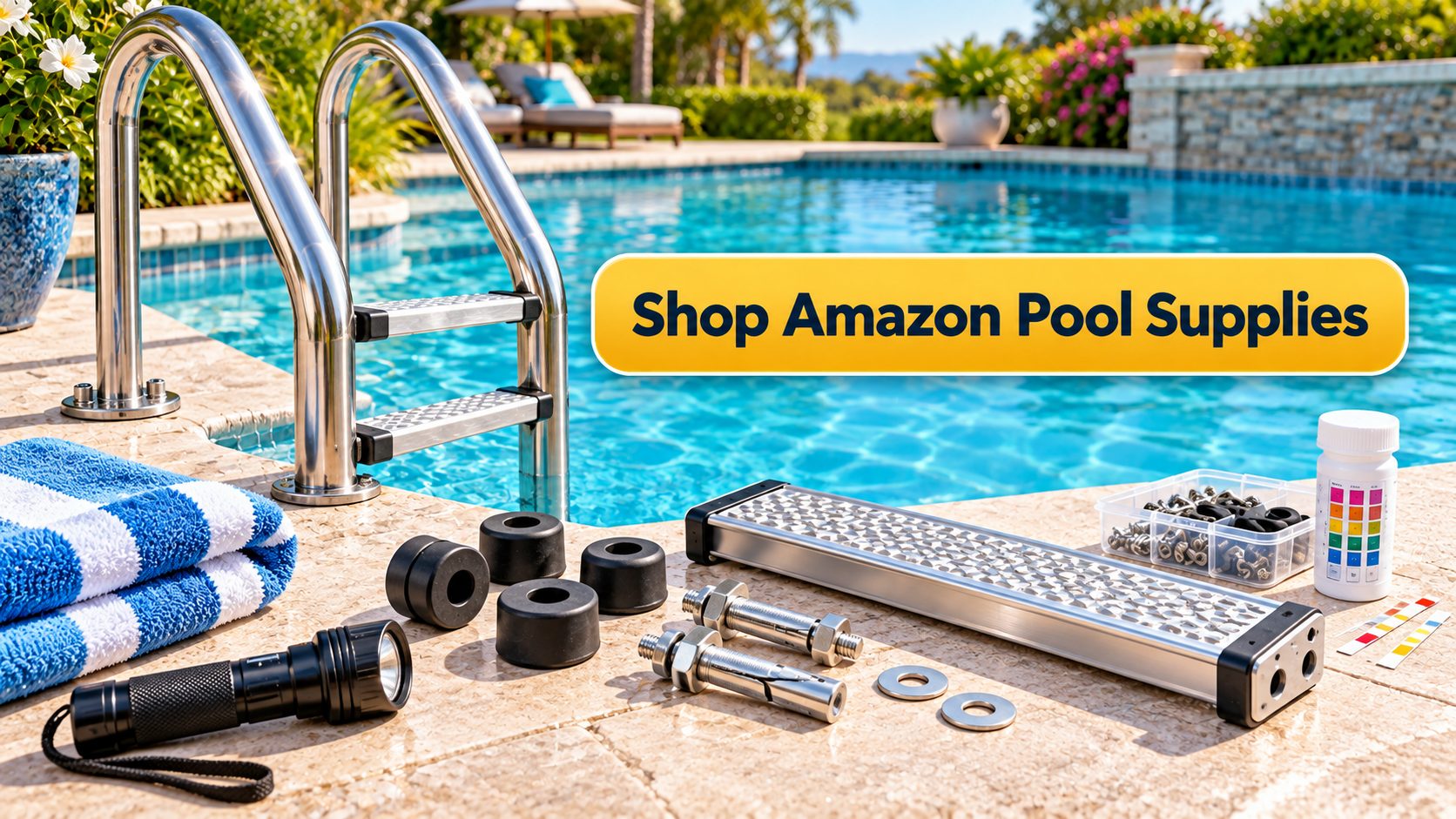
A flashlight, soft cloth, mild detergent, towel, phone camera, notebook and the original ladder manual are enough for most homeowner checks. If you need replacement bumpers, wedges, treads or basic cleaning supplies, compare pool ladder and handrail parts on Amazon, then verify the exact fit against your manufacturer model before buying.
Helpful pool supplies
As an Amazon Associate, Clean Water Pools may earn from qualifying purchases.


Clean Water Pools may earn from qualifying Amazon purchases.
Safety and Medical Note
This article is pool-care information, not medical, electrical, structural, legal or professional repair advice. Keep people off any loose, cracked, sharp, slippery, corroded or unsecured ladder, rail, step or access point. Do not attempt deck-anchor repair, electrical bonding work, underwater hardware repair or structural fixes unless you are properly trained and qualified. Call a qualified pool professional for loose anchors, damaged deck sockets, bonding concerns, bent rails, cracked steps, missing fasteners or any access equipment you cannot verify safely.
Research Note
Factual guidance for this article was checked against S.R.Smith’s pool rail and ladder care guidance, the S.R.Smith ladder and rail installation guide, the CPSC Safety Barrier Guidelines for Home Pools, the Pool Safely summer barrier checklist, and the 2024 International Swimming Pool and Spa Code general compliance chapter. I kept the recommendations homeowner-safe because rail anchors, bonding, deck sockets and ladder model fit depend on the exact product and installation.
FAQ
Is a slightly wobbly pool handrail normal?
No. A slight wobble may come from a wedge, set screw or anchor issue, but swimmers should not use that entry until it is corrected. Movement at the deck is a repair signal, not a feature.
Can I replace pool ladder bumpers myself?
Sometimes, if the ladder manual lists a simple replacement part and the rail itself is stable. Match the exact ladder model and bumper style. If hardware is seized, missing or underwater, have a pool professional handle it.
Why does stainless steel pool rail rust?
Stainless steel can still develop rust or tea staining when contaminants sit on the surface, especially around crevices, welds, bolt heads and mounting hardware. Gentle cleaning and regular inspection help protect the finish.
Should I remove an above-ground pool ladder when the pool is not in use?
If the ladder is designed to be removed or locked, secure it according to the manufacturer instructions and your local barrier requirements. A ladder that stays open can become an unsupervised path into the pool.
Bottom line: ladders and handrails should feel boringly solid before swim season starts. If an entry point moves, cuts, slips, rusts or cannot be secured, close that entry and fix it before guests arrive.
After the access equipment is safe, test the water and use the Pool Chemical Calculator app or poolchemicalcalculator.com before adding chemicals.