
Disclosure: This article contains Amazon affiliate links. As an Amazon Associate, Clean Water Pools may earn from qualifying purchases.
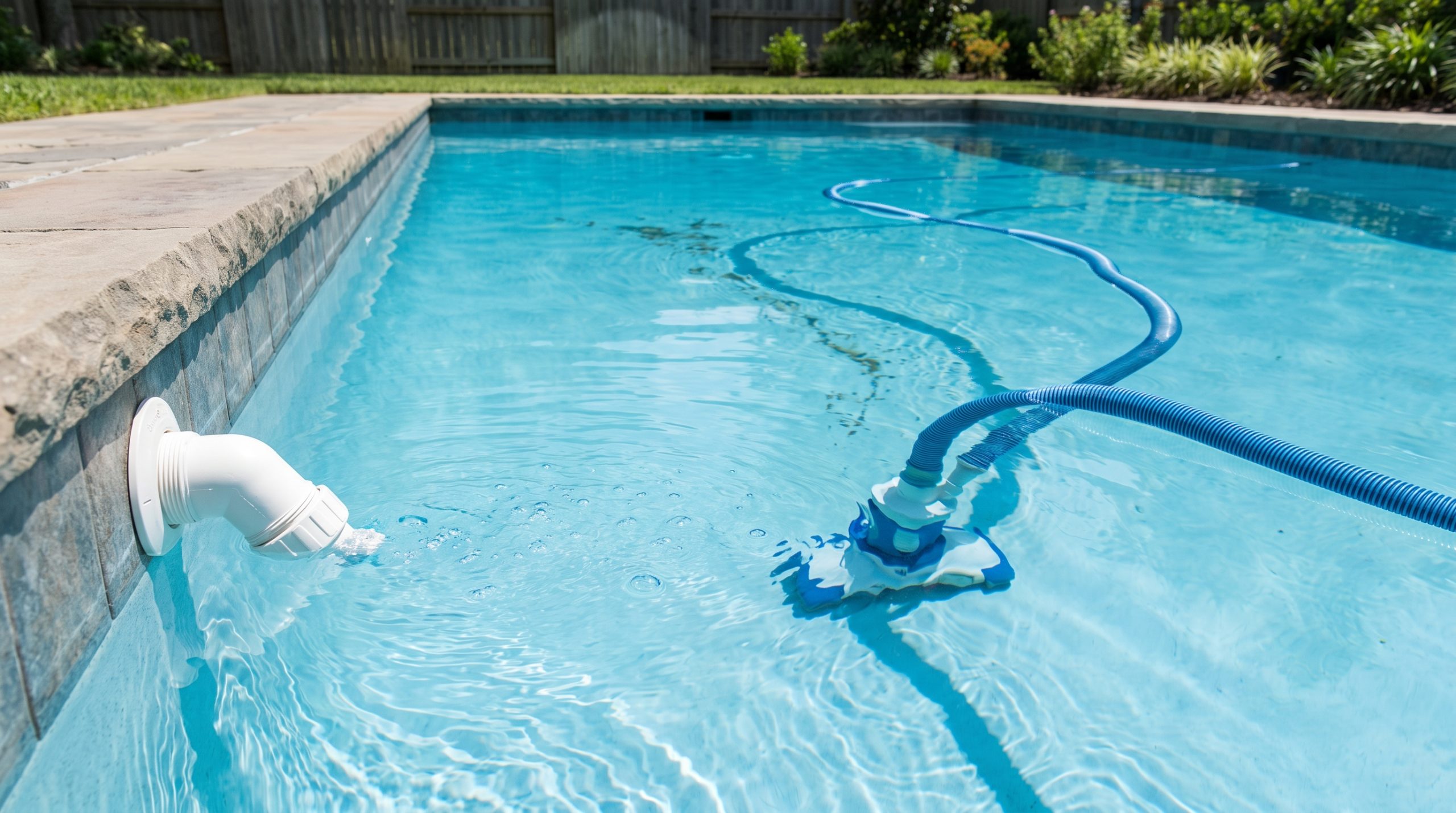
Return jets are supposed to help circulation, but they can quietly ruin suction cleaner coverage. If the cleaner keeps avoiding one wall, parking near the steps, or repeating the same lazy loop, the problem may be the water pushing the hose, not the cleaner itself.
The useful move is not to aim every jet the same way forever. Watch the hose, make one small return adjustment, give the pool time to settle into the new pattern, and then decide whether coverage actually improved.
Calculate the chemistry change before you add more
Pool problems get expensive when you guess. Use Pool Chemical Calculator to dose acid, chlorine, alkalinity increaser, stabilizer, calcium, and other adjustments from your actual pool volume and test results.
Download the Pool Chemical Calculator app
Use the pool calculator website
Start by watching the cleaner, not the wall fitting
Let the cleaner run for at least five minutes with the pump at its normal cleaner setting. Look for patterns: the hose being pushed away from one return, the cleaner turning before it reaches the far end, or the cleaner spending most of its time in one section. Pentair’s Kreepy Krauly manual says return-line flow can push the hose, steer the cleaner away from the return end, or leave it stuck in one part of the pool. That is exactly the kind of coverage problem a homeowner can observe before replacing parts.
Hayward’s suction cleaner manual gives the same basic warning in a different way: return water should be adjusted so circulation does not interfere with pool coverage. Zodiac’s T5 Duo troubleshooting also tells owners to use return jets to guide the cleaner. Three manufacturers, same practical point: return direction matters.
Aim slightly down before you chase suction
If surface flow is pushing the hose, try aiming the return eyeball slightly downward and toward the pool center. Pentair’s Kruiser guide says surface circulation can influence the hose and limit coverage, then recommends loosening the lock ring and redirecting the eyeball diverter slightly downward. Give the body of water time to settle into the new pattern before judging the change.
Do this gently. The goal is not to blast the cleaner across the floor. You want enough circulation to help the hose move randomly without pinning it against a wall, steps, ladder, or bench. A half-inch change at the eyeball can make a bigger difference than it looks like it should.
Use return flow to solve a specific coverage miss
When one area is always missed, think of the return as a steering influence. Pentair’s Kreepy Krauly instructions list several acceptable diverter positions, including flow along the tile line, flow downward, and flow against the hose to help steer the cleaner away from stairs and ladders. That does not mean every pool should use the same setting. It means you should match the adjustment to the pattern you see.
- If the cleaner avoids the deep end, reduce return flow that pushes the hose back toward the shallow end.
- If the cleaner parks near steps, try a return angle that nudges the hose away from that obstruction.
- If the hose skims across the surface and drags the cleaner into a loop, aim the nearest return slightly downward.
- If debris floats past the skimmer, keep enough surface circulation for skimming while still protecting cleaner movement.
Check flow before you blame the jets
Return direction is only one variable. If the cleaner is slow everywhere, stalls on flat floor, or cannot climb when it normally can, verify cleaner flow with the gauge or method in your manual. A dirty filter, clogged pump basket, low water level, suction air leak, clogged cleaner throat, worn diaphragm, or stuck turbine can all look like a coverage problem.
Return adjustments help most when the cleaner has enough suction but the hose path is being influenced. If the cleaner is weak before it even reaches the first return, fix flow and filtration first.
Quick homeowner checklist
- Turn the pump off before loosening a return lock ring or changing an eyeball fitting.
- Mark the current return position with a small piece of tape or a photo.
- Move only one return at a time so you know what changed.
- Restart the pump and let the cleaner run long enough to show a real pattern.
- Keep the hose length, hose weights, flow setting, and skimmer basket condition the same during the test.
- Write down the return position that gives the best coverage so you can return to it after service.
Do not fight the pool’s safety systems
Stay out of suction fittings, drains, electrical equipment, pressure vessels, and automation panels while troubleshooting. Do not block a drain or force a valve position to make a cleaner work. If a fitting is broken, a return eyeball is stuck, air is entering the pump, or you are not sure what a valve controls, stop and call a qualified pool professional.
Pool chemistry note: circulation affects how sanitizer and acid mix, but it does not replace testing. After major cleaning, heavy debris, or water replacement, test the water and use calculated doses instead of guessing.
Research note: this article was reviewed against manufacturer guidance from the Pentair Kreepy Krauly suction-side cleaner guide, Pentair Kreepy Krauly Kruiser guide, Hayward suction cleaner owner’s manual, and Zodiac T5 Duo owner/troubleshooting materials. I kept their advice separate instead of turning every return jet into one fake universal angle.
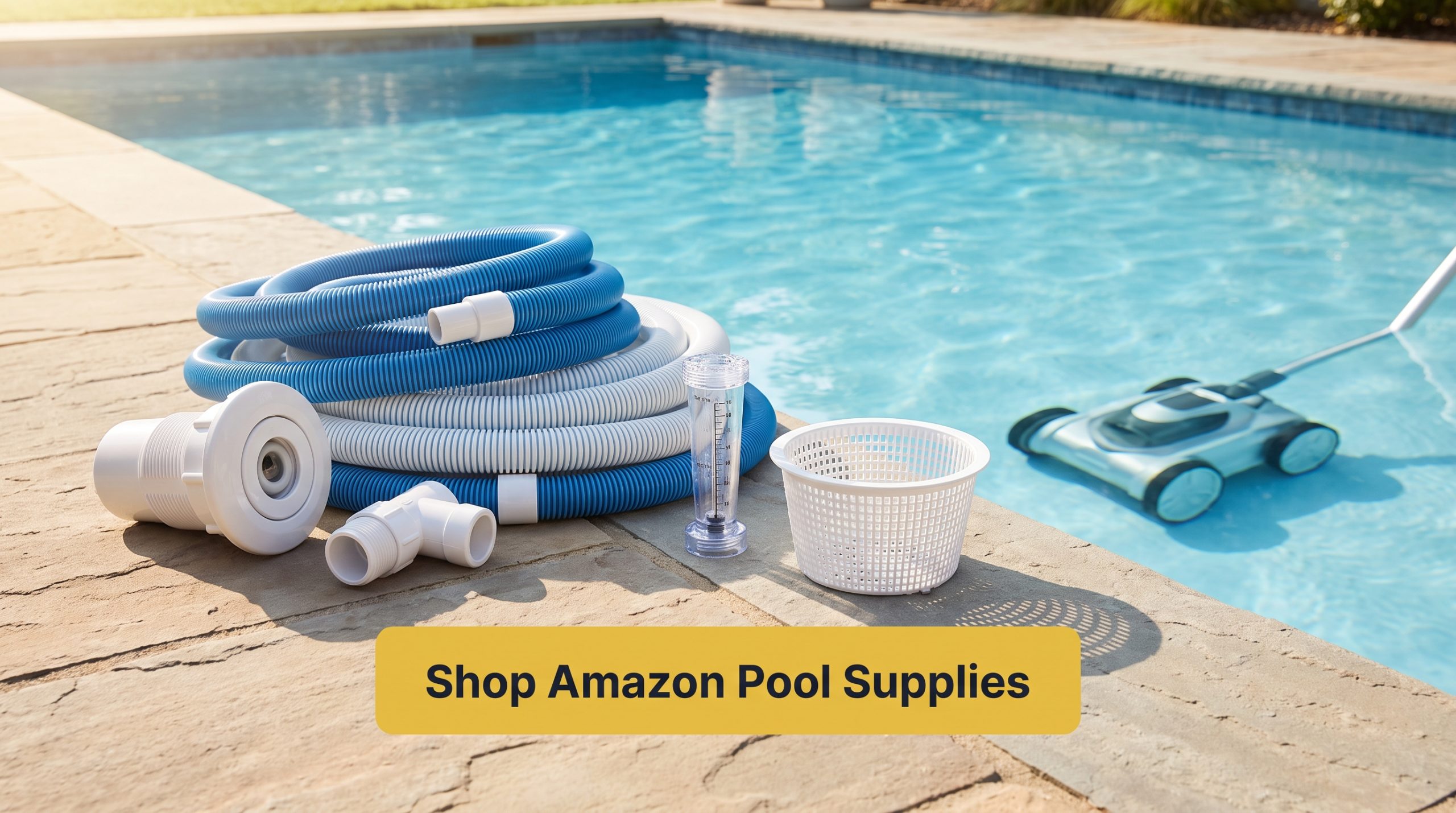
Helpful pool supplies
As an Amazon Associate, Clean Water Pools may earn from qualifying purchases.


Compare suction cleaner hoses, return fittings, and flow-check tools on Amazon after you confirm what your cleaner manual recommends.
Clean Water Pools may earn from qualifying Amazon purchases.
FAQ
Should pool return jets point up or down when using a suction cleaner?
Start with the cleaner manual. If the hose is being pushed around by surface flow, a slightly downward return angle often improves random cleaner movement without shutting off circulation.
Can return jets make a suction cleaner miss part of the pool?
Yes. Return flow can push the hose or cleaner away from one area, especially near steps, ladders, benches, and the wall closest to a strong return.
How long should I test a return jet adjustment?
Give the cleaner several minutes after each small adjustment. Pentair’s Kruiser guide specifically says to allow time for the body of water to settle into the new pattern.
What if the cleaner is still slow after changing jet direction?
Then return direction probably is not the main problem. Check cleaner flow, filter pressure, baskets, hose leaks, hose length, and the cleaner’s moving parts before buying a replacement.
Bottom line: Return jets can either help the suction cleaner roam or trap it in a bad pattern. Watch the hose, aim one fitting at a time, and keep flow checks separate from coverage checks.
For chemistry changes after cleaning, use the Pool Chemical Calculator app or the poolchemicalcalculator.com website so you are dosing from real numbers.