# Calcium Scale on Pool Tile: How to Remove It and Keep It From Coming Back
Calcium scale on pool tile is one of those problems that makes an otherwise clean pool look neglected. You see a white, gray, or tan crust along the waterline, especially around spillways, steps, raised spas, and areas where water evaporates quickly.
The good news: most waterline scale can be improved. The bad news: if you only scrub it off and ignore the water balance, it comes right back.
Here’s how to tell what kind of scale you have, clean it without damaging the tile, and adjust the chemistry so it does not become a monthly fight.
## What calcium scale looks like
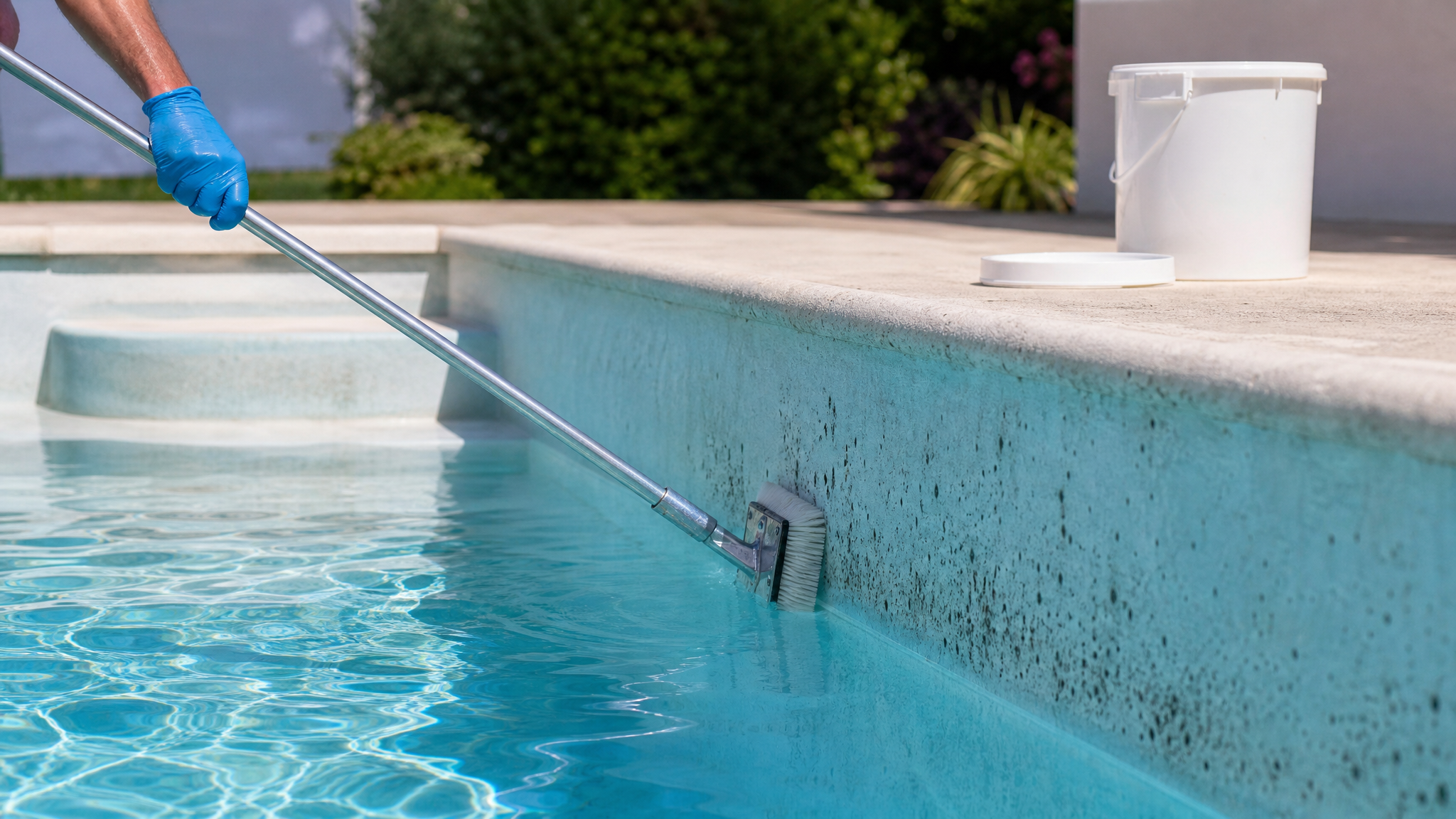
Pool tile scale usually appears as a rough white or beige ring at the waterline. It may feel chalky, crusty, gritty, or hard like mineral deposits on a shower door.
You may also see scale on:
– Waterline tile
– Spa spillways
– Rock features
– Salt cell plates
– Heater surfaces
– Return fittings
– Pool cleaner parts
Scale is most visible where water evaporates. As water leaves, minerals stay behind and harden on the surface.
## The two main types of pool scale
Most pool scale is either calcium carbonate or calcium silicate.
Calcium carbonate is more common and usually easier to remove. It often reacts to acid-based cleaners and can sometimes be softened with careful treatment.
Calcium silicate is harder, grayer, and more stubborn. It usually builds over a longer period and may require professional cleaning, glass bead blasting, or specialized treatment.
If the buildup appeared quickly and looks chalky white, start by assuming calcium carbonate. If it is rock-hard and has been ignored for years, it may be tougher than a brush-and-cleaner job.
## Why calcium scale forms
Scale forms when water is oversaturated with calcium carbonate. The usual drivers are:
– High pH
– High calcium hardness
– High total alkalinity
– Warm water
– Heavy evaporation
– Aeration from waterfalls, spas, or spillovers
– Saltwater chlorine generator pH rise
The important part is that calcium hardness alone is not the whole story. A pool can have moderate calcium and still scale if pH and alkalinity are too high. A pool with higher calcium can sometimes behave if pH and alkalinity are tightly managed.
## Test before you start cleaning
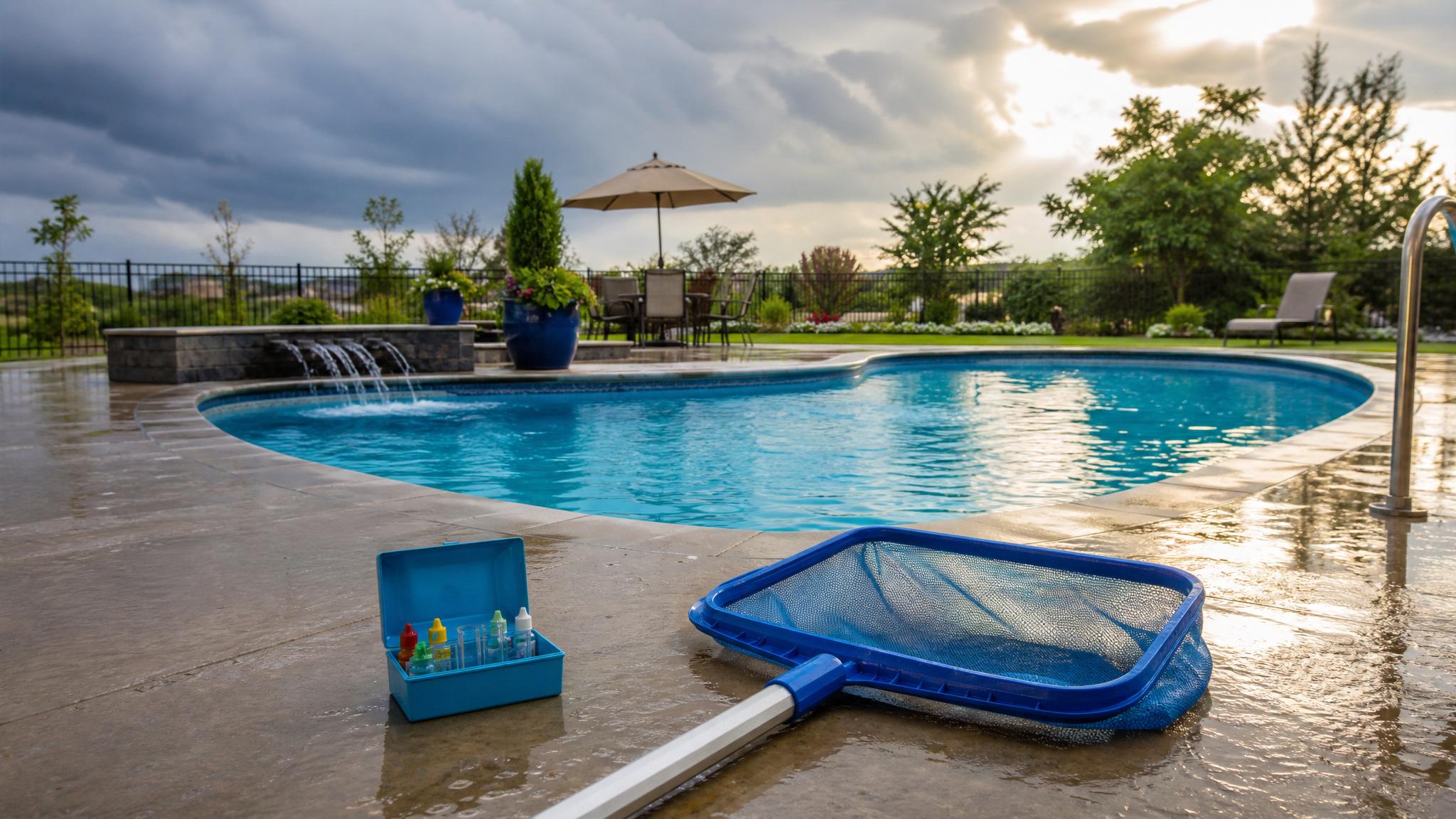
Before you scrub the tile, test the water. At minimum, check pH, total alkalinity, calcium hardness, and CYA. If it is a salt pool, check salt and inspect the salt cell too.
Useful starting targets for many pools are:
– pH: around 7.4–7.6 for routine maintenance
– Total alkalinity: often 60–90 ppm, depending on pool type and pH drift
– Calcium hardness: commonly 200–400 ppm for many plaster pools, with different targets for vinyl or fiberglass
– CYA: appropriate for your chlorine method
Do not chase these blindly. Surface type, fill water, and equipment matter. But if pH is 8.0 and alkalinity is high, scale removal will not hold for long.
Download Pool Chemical Calculator for iPhone | Get Pool Chemical Calculator for Android
## Start with the gentlest cleaning method
Do not go straight to harsh acid or metal tools. Tile can scratch, grout can weaken, and natural stone can be damaged by the wrong cleaner.
Start with:
1. Lower the water level slightly below the scale line.
2. Wet the tile.
3. Use a nylon brush or pool tile brush.
4. Try a pool-safe tile cleaner made for calcium deposits.
5. Rinse debris away from the tile.
If the tile is ceramic or glass, a pumice stone made for pool use may help. Keep it wet and test a small area first. Do not use pumice on fiberglass, vinyl, painted surfaces, polished stone, or anything that can scratch easily.
## When to use acid cleaners
Acid-based tile cleaners can dissolve calcium carbonate, but they deserve respect. Wear gloves and eye protection, follow the label, and avoid mixing chemicals. Protect nearby metal, stone, plants, and deck surfaces.
Never pour acid into the pool randomly hoping it will clean the tile line. That can damage water balance and surfaces without solving the actual deposits.
For heavy scale, work in small sections. Apply, wait only as directed, brush, and rinse. If the cleaner barely touches the deposit, you may be dealing with calcium silicate or years of buildup.
Clean Water Pools may earn from qualifying Amazon purchases.
## What about pressure washing or blasting?
For stubborn scale, professional bead blasting can work very well. Pool pros may use glass bead, kieserite, or other media depending on the tile and surface. This is often safer and more effective than aggressive DIY scraping.
Pressure washing can help some surfaces, but it can also damage grout, soft stone, or old tile. If the scale is heavy and the tile is valuable, get a professional opinion before blasting it with high pressure.
## Prevent scale from coming back
Cleaning removes the symptom. Water balance controls the cause.
To prevent scale:
– Keep pH from drifting high
– Keep alkalinity in a range that slows pH rise
– Manage calcium hardness based on pool surface
– Brush the waterline weekly during hot weather
– Reduce unnecessary aeration if pH constantly rises
– Clean salt cells before heavy buildup forms
– Test fill water if you live in a hard-water area
If your fill water has high calcium, you may need more careful pH control, partial drain/refill planning, or a scale-control product. Scale inhibitor can help, but it is not a free pass to ignore pH.
## Salt pools need extra attention
Saltwater pools often have rising pH, and that makes tile scale more likely. The salt cell itself also creates high-pH conditions while generating chlorine, which can encourage scale inside the cell.
If a salt pool has waterline scale and a crusty salt cell, focus on pH and alkalinity first. Cleaning the cell over and over without fixing water balance shortens the cell’s life and does not solve the root problem.
## When scale might actually be something else
Not every waterline mark is calcium. Sunscreen, body oils, pollen, dirt, and metal staining can all leave marks around the waterline.
A greasy ring that wipes away with tile cleaner is not the same as mineral scale. Rust-colored stains may point to iron. Blue-green stains may point to copper. If the stain color is unusual or the pool uses well water, test metals before attacking it with the wrong product.
Use Pool Chemical Calculator after testing so pH, alkalinity, and calcium adjustments are measured instead of guessed.
## FAQ
### What causes white scale on pool tile?
White scale is usually calcium carbonate left behind as water evaporates. High pH, high alkalinity, high calcium hardness, warm water, and aeration make it more likely.
### Can I use a pumice stone on pool tile?
A pool-safe pumice stone can work on some ceramic or glass tile if kept wet, but it can scratch softer surfaces. Test a small area first and avoid pumice on vinyl, fiberglass, painted surfaces, or polished stone.
### Will lowering pH remove calcium scale?
Lowering pH helps prevent new scale and may slowly soften some deposits, but visible tile scale usually needs physical cleaning or a pool-safe calcium remover.
### Is calcium scale dangerous?
Calcium scale is not usually dangerous by itself, but it can make surfaces rough, clog salt cells, reduce heater efficiency, and signal water balance problems that should be fixed.
### How do I keep calcium scale from coming back?
Keep pH, alkalinity, and calcium hardness in range, brush the waterline regularly, control pH rise in salt pools, and test fill water if you live in a hard-water area.
## Bottom line
Calcium scale on pool tile is removable, but it is not just a cleaning issue. Start gently, avoid damaging tools, use acid cleaners carefully, and fix the water balance that allowed the scale to form.
Pool Chemical Calculator can help you calculate accurate pH, alkalinity, calcium, stabilizer, and chlorine adjustments after each test.
Download Pool Chemical Calculator for iPhone or get Pool Chemical Calculator for Android.