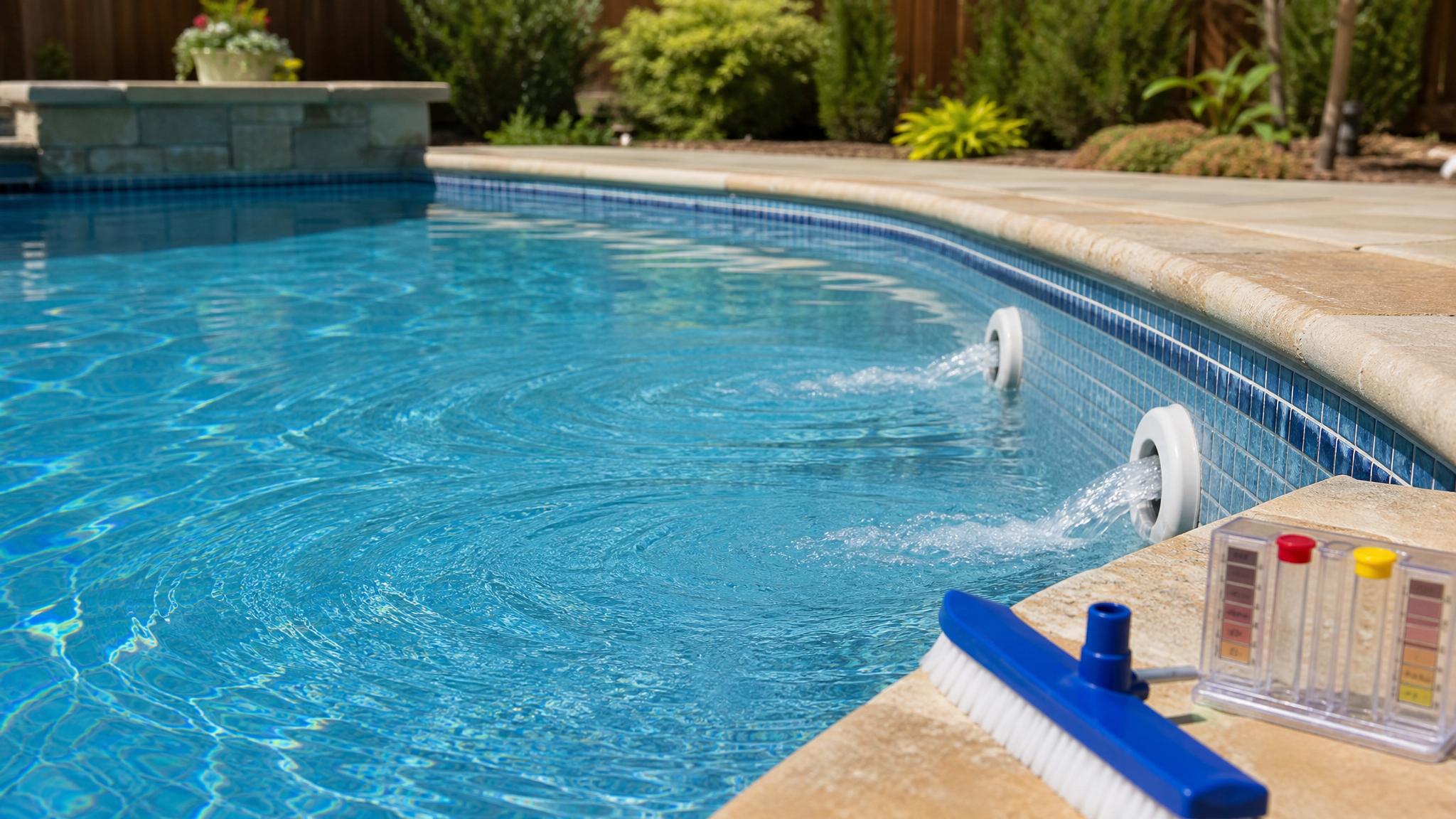
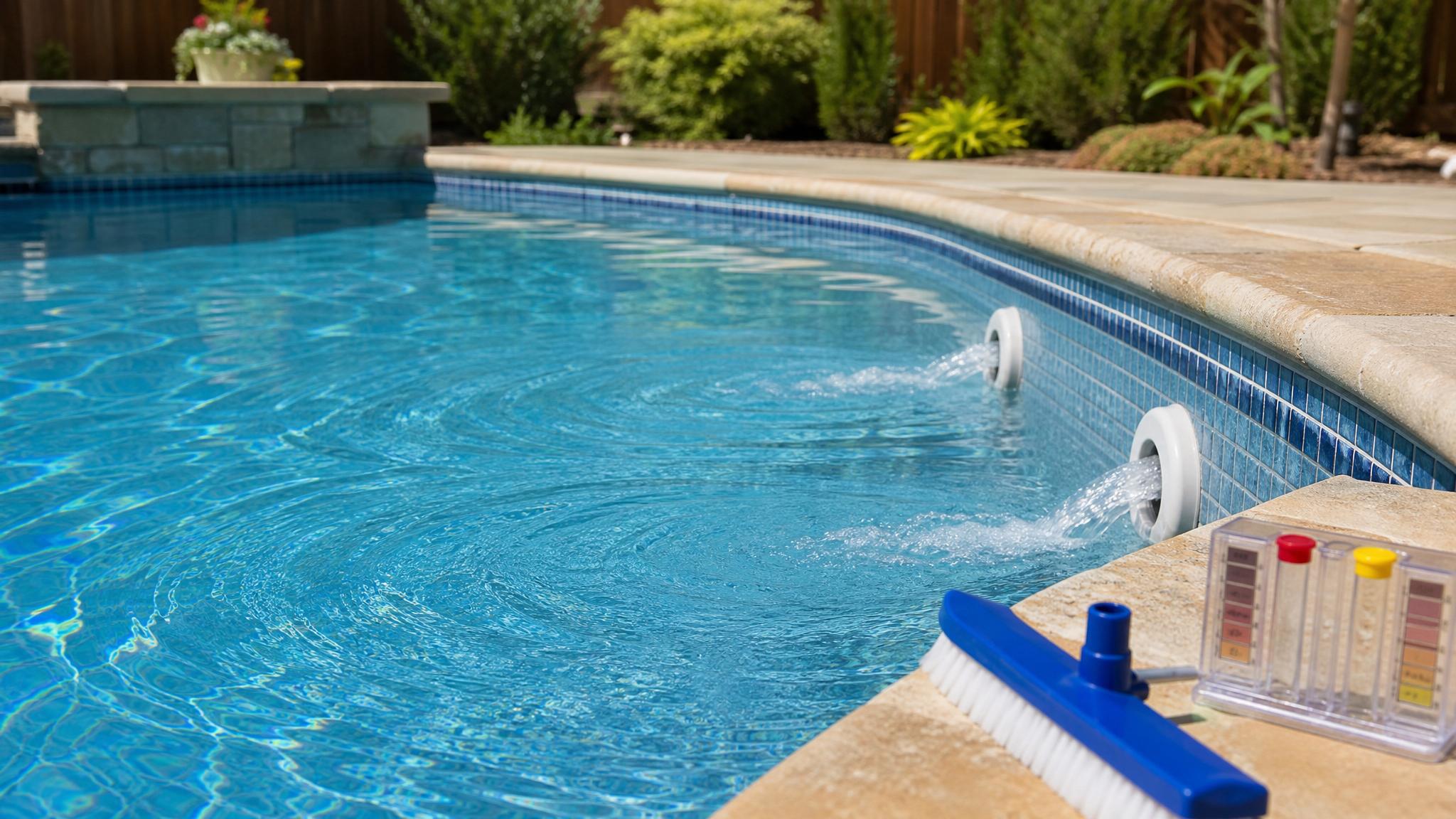
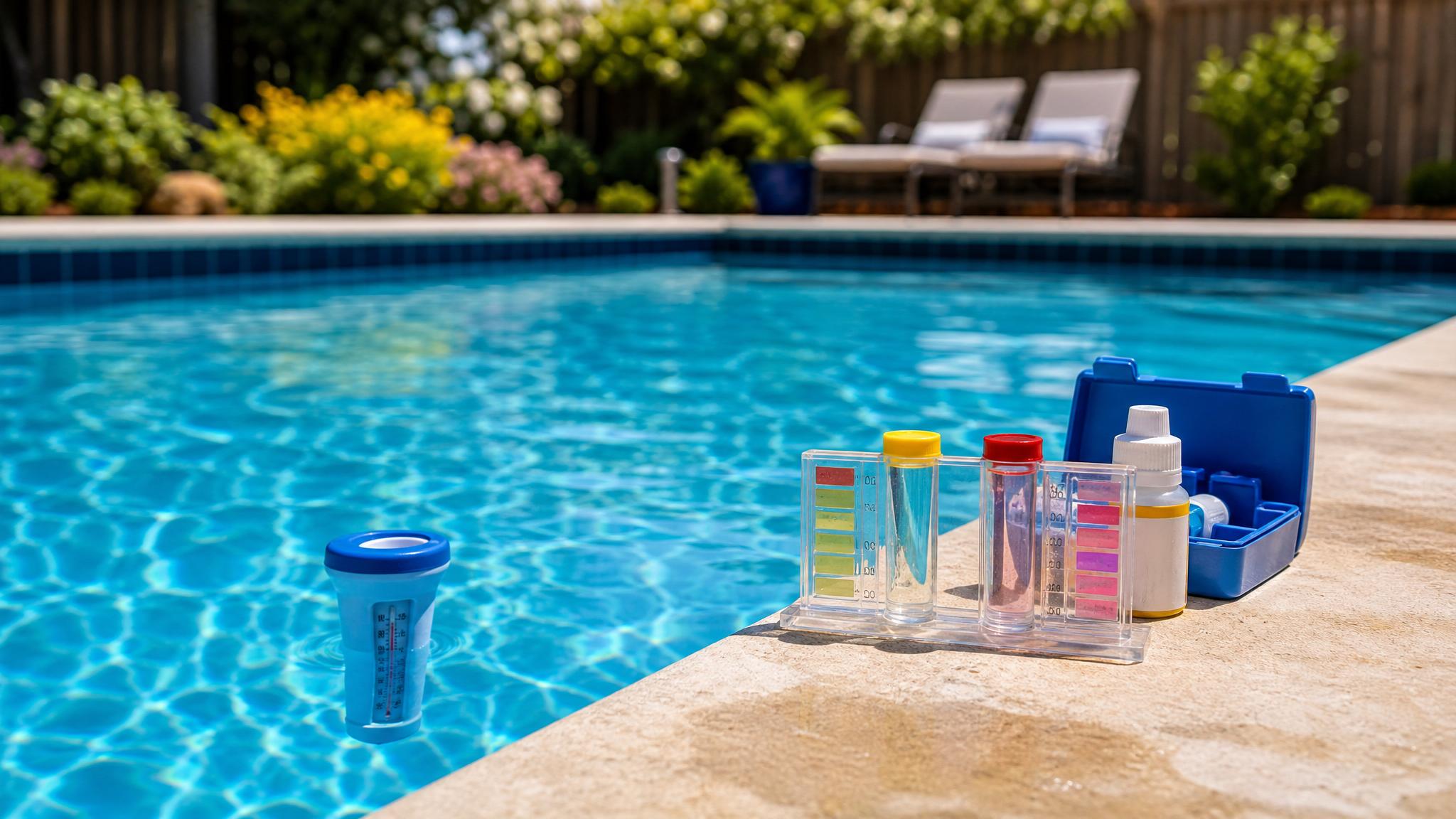
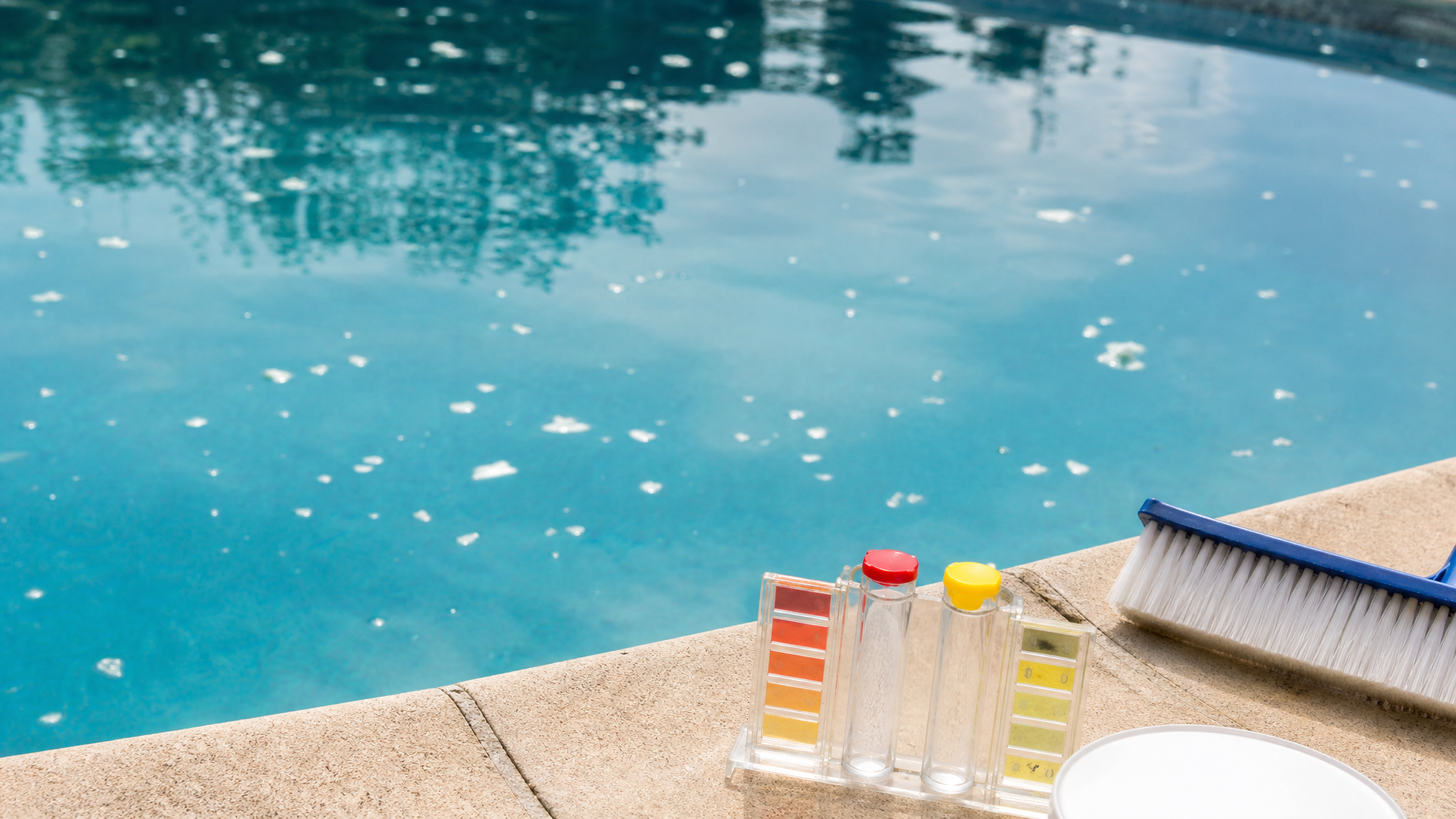
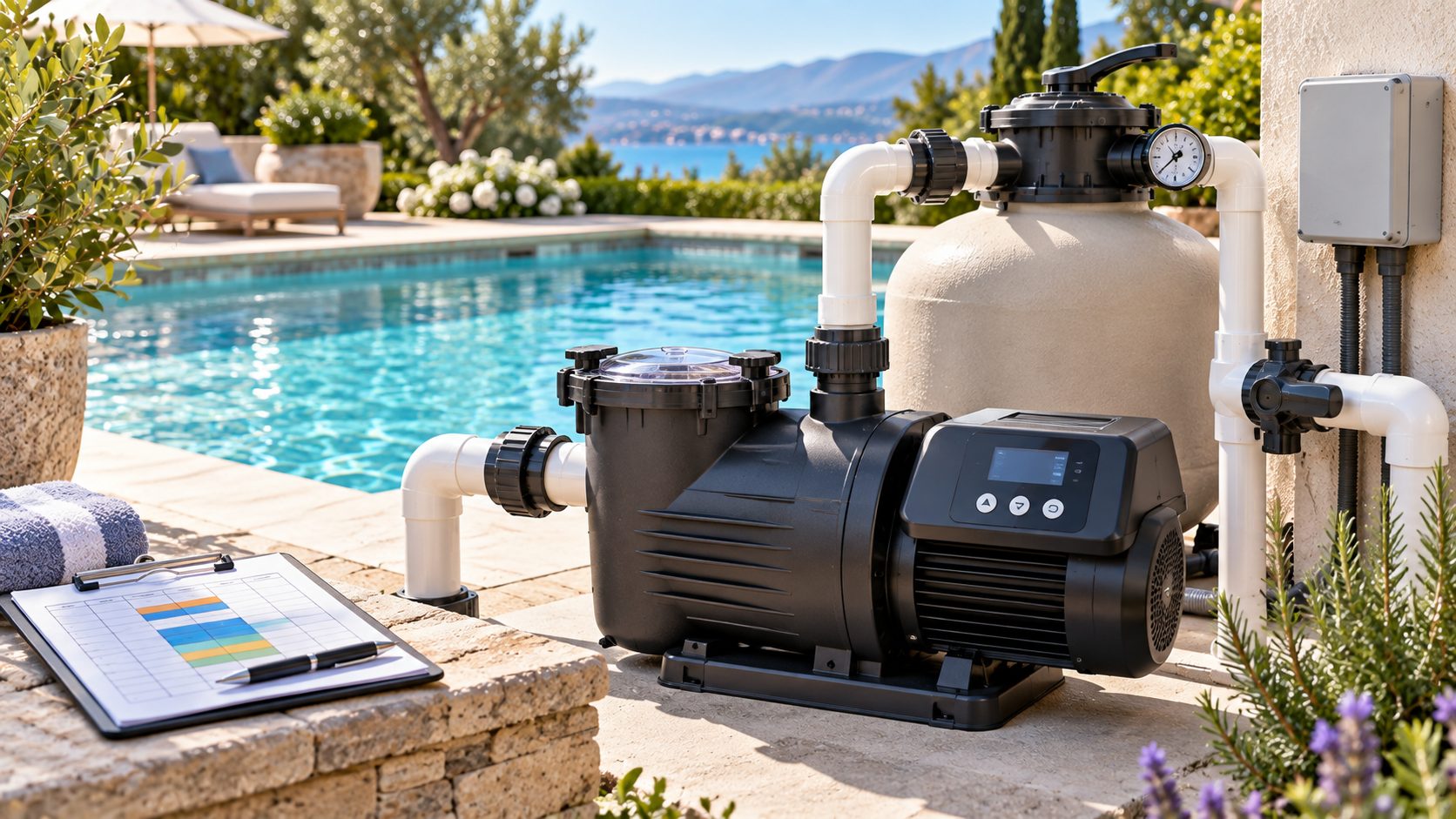
A pool test log is only useful when it lets you see patterns. Random numbers on sticky notes do not help much when chlorine demand jumps, pH drifts, or a pump schedule changes.
Build the habit around decisions, not paperwork. Record what you tested, what changed, and what you did next so the next reading has context.
Calculate the chemistry change before you add more
Pool problems get expensive when you guess. Use Pool Chemical Calculator to dose acid, chlorine, alkalinity increaser, stabilizer, calcium, and other adjustments from your actual pool volume and test results.
Download the Pool Chemical Calculator app
Use the pool calculator website
Record conditions with the numbers
Write down chlorine or bromine, pH, water appearance, recent rain, heavy swimmer use, and whether the pump was running normally. CDC guidance for pool operation emphasizes regular pH and disinfectant testing plus accurate maintenance records. A homeowner log can borrow that discipline without pretending to be a commercial inspection report.
Separate readings from actions
Keep the test result in one line and the chemical or maintenance action in another. That way you can tell whether pH rose before or after aeration, whether chlorine fell after a party, and whether a filter cleaning changed circulation. Do not backfill guesses later; uncertainty belongs in the notes.
Use the log before calling the problem solved
One normal reading does not prove a recurring problem is gone. Look for a stable pattern over several checks, especially after storms, hot weather, or heavy use. If readings swing outside the test kit range, follow the kit directions and get professional water testing rather than inventing a correction.
Quick checklist
- Use the same test method each time when possible.
- Record maintenance actions separately from chemical readings.
- Note storms, parties, refill water and unusual equipment sounds.
- Keep photos of odd water color beside the log.
Helpful pool supplies
As an Amazon Associate, Clean Water Pools may earn from qualifying purchases.


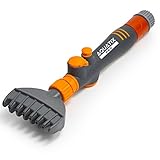
Compare pool troubleshooting supplies on Amazon before replacing parts or test supplies.

Clean Water Pools may earn from qualifying Amazon purchases.
Do the simple checks before the expensive ones
Most pool issues have a short list of common causes. Work from the easy checks toward the expensive repairs, retest after each change, and write down what actually moved the numbers or improved circulation.
FAQ
How often should I test pool water at home?
CDC recommends checking disinfectant and pH at least twice daily, and more frequently with heavy use. Follow the test-kit directions and the relevant sanitizer product instructions, and record results consistently.
Should I record every chemical dose?
Yes. A dose without a before-and-after test can make later troubleshooting much harder, especially with pH, alkalinity and sanitizer demand.
Bottom line: Diagnose one variable at a time, keep water chemistry in range, and use calculated doses instead of guessing.
Get exact pool dosing help from the Pool Chemical Calculator app or use poolchemicalcalculator.com.